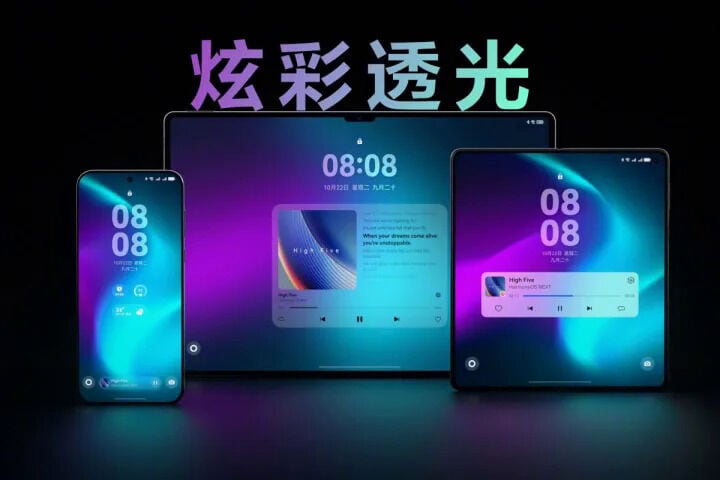
Huawei has introduced HarmonyOS Next 5, the latest iteration of its self-developed operating system, which no longer relies on Android. HarmonyOS Next 5 is built on a self-developed microkernel based on the OpenHarmony open-source core, supporting applications via the Huawei Ark compiler and Huawei Mobile Services (HMS). The new OS aims to provide a seamless unified architecture across various devices, including smartphones, tablets, wearables, smart home devices, and car cockpits. HarmonyOS Next 5 features a refreshed visual identity with new lockscreen and home screen customization options, redesigned control center, faster animations, and improved app launch speeds.
In terms of performance, HarmonyOS Next 5 offers a 30% increase in device fluency and up to 20% lower power consumption in communication between software modules. The OS includes system-level AI powered by the Pangu large language model, enhancing user experience with features like Huawei Share 2.0, which allows for rapid file transfers between devices. HarmonyOS Next 5 also introduces a new security architecture called Star Shield, providing system-level protection. The public beta version is currently available in China for devices like the Pura 70 series, Huawei Pocket 2, and MatePad Pro 11 (2024), with plans for a global release in the future.
Image Credit: Huawei
What's Driving This Trend
- Self-developed Mobile OS
- The launch of Huawei's HarmonyOS Next 5, built on a proprietary microkernel, represents a shift towards in-house operating systems, moving away from established platforms like Android.
- Unified Device Architecture
- HarmonyOS Next 5 offers a seamless unified architecture across multiple device categories, signaling an evolution towards integrated ecosystems that enhance cross-device functionality.
- Enhanced AI Integration
- Incorporating system-level AI through the Pangu large language model, HarmonyOS Next 5 exemplifies the growing trend of AI-enhanced user experiences in mobile operating systems.
Who This Affects Most
- Mobile Operating Systems
- The introduction of self-developed platforms like HarmonyOS Next 5 stands to disrupt the mobile OS market, traditionally dominated by Android and iOS.
- Smart Home Devices
- HarmonyOS Next 5's compatibility with smart home devices indicates future innovation opportunities in creating more integrated and seamless smart home ecosystems.
- Automotive Technology
- The inclusion of car cockpits in HarmonyOS Next 5's unified architecture highlights the potential for significant advancements in integrated in-car entertainment and control systems.