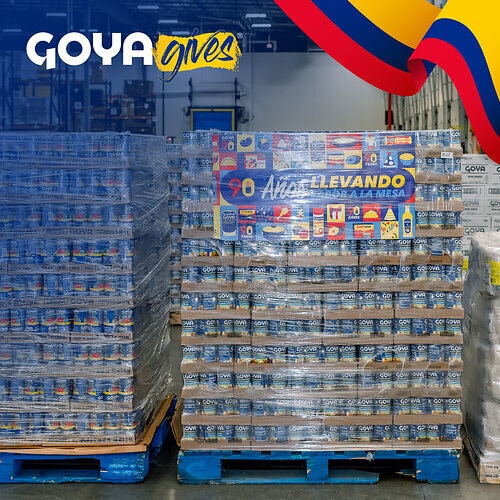
Goya Foods, the largest Hispanic-owned food company in the United States, has announced a donation of more than 200,000 pounds of food. The donation consists of five truckloads of various essential grocery items, and the aim is to support communities in Colombia that have been affected by recent devastating earthquakes. The distribution of the food is being carried out in partnership with the disaster-response organization Global Empowerment Mission to ensure that supplies reach the most vulnerable households as quickly as possible.
Goya Foods' humanitarian effort is part of the company’s broader Goya Gives initiative, which has a 90-year legacy of providing nourishment during crises. This charitable delivery follows similar relief actions the company has taken in response to other natural disasters, including earthquakes in Venezuela.
Image Credit: Goya Foods
What Makes This Trend Stand Out
- Corporate Disaster Relief
- Brand-led humanitarian programs are evolving into rapid-response systems that strengthen community trust while creating new models for crisis logistics and social impact visibility.
- Food Aid Logistics
- Large-scale grocery donations highlight the growing role of coordinated supply chains, nonprofit partnerships, and data-driven distribution in reaching vulnerable households faster after disasters.
- Purpose-driven Food Brands
- Crisis-focused giving reinforces how food companies can differentiate through sustained social responsibility while building resilient platforms for community support across regions.
Sectors Adopting This
- Packaged Foods
- Essential grocery manufacturers are positioned to expand beyond retail by integrating emergency nutrition, shelf-stable product design, and relief-ready inventory strategies.
- Humanitarian Aid
- Disaster-response organizations are becoming critical partners for corporations seeking efficient deployment, transparent allocation, and localized support during climate and seismic emergencies.
- Supply Chain Management
- Relief deliveries reveal demand for agile transportation networks, real-time coordination tools, and scalable distribution systems that can pivot quickly during regional crises.