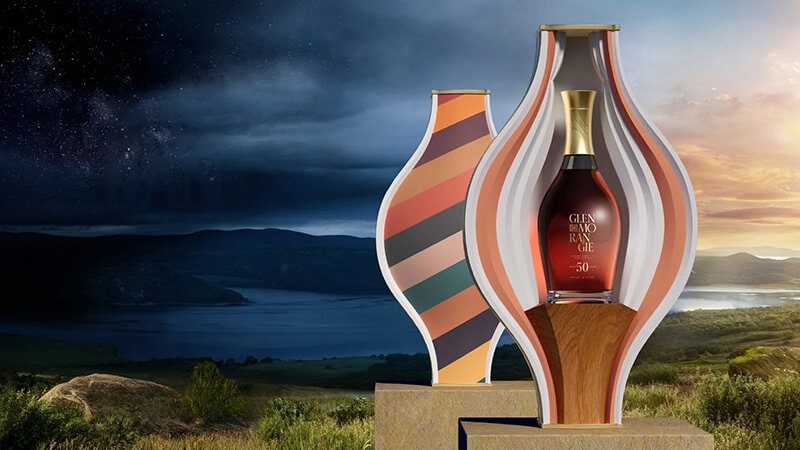
Glenmorangie has put out a 50-year-old single malt that turns decades of patience into a collectible pour. The Highland distillery created Glenmorangie 50 Years Old as its oldest Scotch yet, and the whisky sits at 45.7 percent ABV for a stronger, more structured sip.
The spirit also ties back to the distillery's own history, since it came from barley malted on site before that process ended in 1977. Its porcelain presentation adds another layer, with an oval vessel finished in 50 colors that mirrors the whisky's age without feeling fussy.
Rarity is now part of the drinking experience, not just the liquid inside. Only 149 numbered bottles keeps the release firmly in trophy-bottle territory, and that will make future ultra-aged single malts compete on story, presentation, and scarcity as much as on flavor.
Image Credit: Glenmorangie
Key Themes Behind This Trend
- Ultra-aged Spirits
- Decades-long maturation is becoming a luxury signal as heritage producers transform time-intensive inventory into high-value collectible releases.
- Scarcity-led Collectibles
- Numbered micro-releases are reshaping premium alcohol into an investment-adjacent category where ownership status can rival consumption appeal.
- Narrative Packaging
- Porcelain vessels, archival production details, and age-coded design elements create premium differentiation by turning bottles into display-worthy artifacts.
Where This Applies
- Luxury Spirits
- Prestige distilleries are finding new value in rare casks by pairing exceptional age statements with stronger provenance and ceremonial presentation.
- Collectibles Market
- Limited-edition whisky releases increasingly overlap with art, watches, and rare goods as affluent buyers seek scarce assets with cultural cachet.
- Premium Packaging
- High-end materials and symbolic design systems are expanding packaging’s role from protection to storytelling, authentication, and luxury positioning.