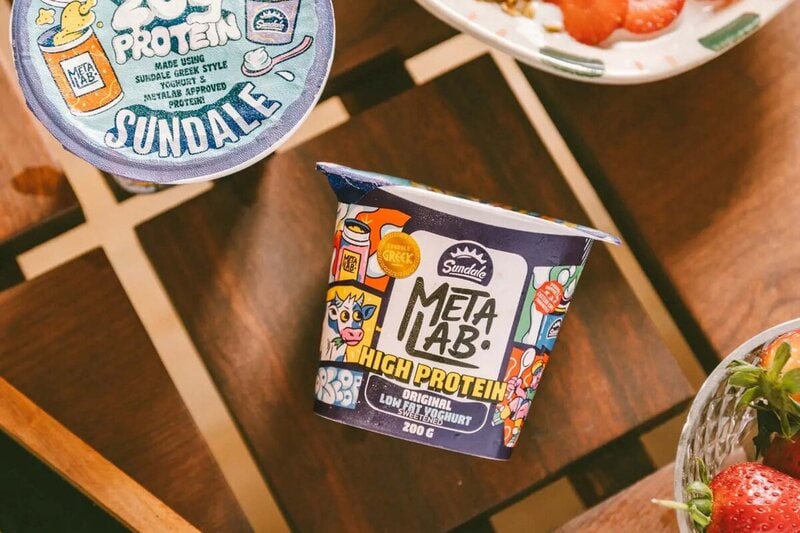
MetaLab is bringing its added-protein approach to the dairy case with 'Sundale High Protein Yogurt,' a low-fat pot that feels more like everyday yogurt than a separate supplement. The South African collaboration uses free-range milk and delivers 20g of protein in one pot, turning a fridge staple into a more substantial snack or breakfast.
Cultures from Greece and a 99.9% dairy recipe keep the product aligned with familiar yogurt expectations, so the added protein does not ask buyers to change how they use it. The line reaches Checkers this month in more than 200 stores, with 'Double Chocolate Chip' and 'Original' offering both dessert-led and plain takes on the concept.
Checkers' distribution across more than 200 locations moves added-protein yogurt from a niche nutrition purchase into routine supermarket traffic. The chilled format also widens MetaLab's push into familiar foods, where convenience matters as much as nutrition.
Image Credit: Stack3d
What's Driving This Trend
- Protein-enhanced Staples
- Everyday grocery items with elevated protein content create room for nutrition-forward formats that fit existing eating habits without feeling like supplements.
- Functional Dairy Convenience
- Chilled dairy products that combine familiar taste with added benefits signal opportunities for brands to merge wellness positioning with high-frequency supermarket purchases.
- Mainstream Fitness Nutrition
- Mass retail placement of high-protein foods reflects a shift in performance nutrition from specialty channels into accessible, routine consumer occasions.
Who This Affects Most
- Dairy Products
- Low-fat, high-protein yogurt made with familiar dairy cues highlights potential for traditional dairy categories to compete in functional snacking and breakfast occasions.
- Grocery Retail
- Supermarket distribution across large store networks can accelerate adoption of upgraded nutrition products by placing them directly in habitual shopping paths.
- Health and Wellness Foods
- Protein-rich products that resemble conventional foods point to a growing market for wellness offerings that emphasize ease, taste, and everyday relevance.