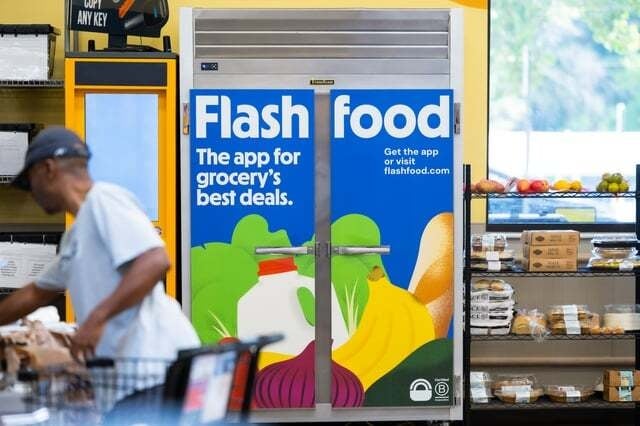
Kroger launched a Flashfood app pilot designed to redirect surplus groceries to customers at reduced prices using the Flashfood mobile app, featuring time-limited discounts on near‑expiry items. The rollout targeted the retailer's mid-Atlantic stores and was introduced as part of Kroger's efforts to reduce landfill waste while offering value to shoppers.
The pilot integrated store inventory with the app so associates could mark marked-down products for quick purchase, with pricing and availability updated in real time.
By partnering with Flashfood, Kroger combined digital convenience with in-store surplus management to speed sales of short‑shelf‑life items and cut food loss. For consumers this meant lower-cost options and simpler access to discounted fresh items, while the program aligned with broader retail trends toward sustainability and circular food systems.
Image Credit: Kroger
What Makes This Trend Stand Out
- Surplus-to-consumer Marketplaces
- Creates platforms that convert perishable overstock into direct-to-consumer discount channels, enabling new revenue streams and inventory monetization models.
- Real-time Inventory Discounting
- Enables dynamic pricing systems tied to live stock levels and shelf life, transforming markdown strategies into predictive, time-sensitive commerce features.
- Retail Sustainability Partnerships
- Fosters cross-sector collaborations between retailers and tech providers to embed circular-economy solutions into store operations and customer value propositions.
Sectors Adopting This
- Grocery Retail
- Stand-alone and chain grocers can redefine margin management by integrating app-driven surplus sales into everyday store workflows and merchandising.
- Food Waste Technology
- Startups and platform providers have opportunities to develop analytics and matching engines that optimize surplus allocation across consumer segments.
- Last-mile Logistics
- Delivery and pickup services can be reimagined to prioritize rapid fulfillment of short‑shelf‑life purchases, reshaping routing and cold-chain requirements.