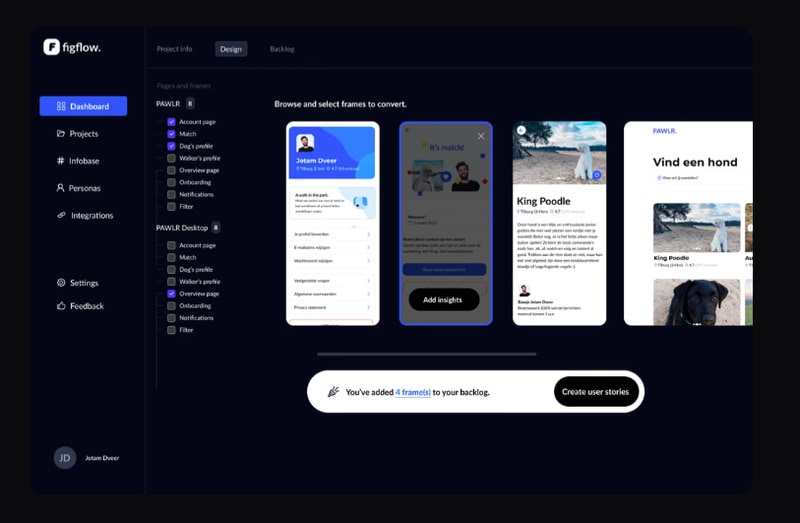
Figflow is an AI-powered tool designed to streamline collaboration between product, design, and development teams. It automatically translates Figma design files into structured user stories, helping product teams move more efficiently from design concepts to development-ready tasks.
By reducing manual transcription and documentation work, Figflow can accelerate product workflows and ensure that designs are translated with consistency and clarity. This is particularly valuable for agile teams that operate on fast iteration cycles and need to minimize handoff friction. Figflow’s focus on practical output—clear, actionable user stories—positions it as a productivity enhancer rather than a design tool. For product managers, it offers a way to align team understanding quickly without losing detail. It integrates directly into the design-to-dev pipeline, helping teams ship more effectively with fewer blockers.
Image Credit: Figflow
What Makes This Trend Stand Out
- AI-powered Workflow Enhancement
- Advanced AI solutions like Figflow are transforming workflows by automating the conversion of design concepts into actionable tasks, reducing human error and enhancing efficiency.
- Agile Process Automation
- Tools that streamline aspects of the agile process, such as translating designs into user stories, offer teams the ability to iterate faster with improved clarity and reduced transition gaps.
- Design-to-development Integration
- Enhanced integration between design and development processes is becoming crucial for teams to maintain pace and quality, providing a boost to productivity through seamless handoffs.
Sectors Adopting This
- Product Management Software
- Innovations that automate and enhance the transition from design to development are redefining product management, offering teams advanced tools for efficient project delivery.
- Agile Development Platforms
- Incorporating tools that bridge design and development directly into agile platforms can help teams achieve more dynamic and fluid project cycles with fewer interruptions.
- Design Collaboration Tools
- As teams look for ways to collaborate more effectively, innovations in translating design outcome into actionable tasks will lead to more cohesive and aligned development efforts.