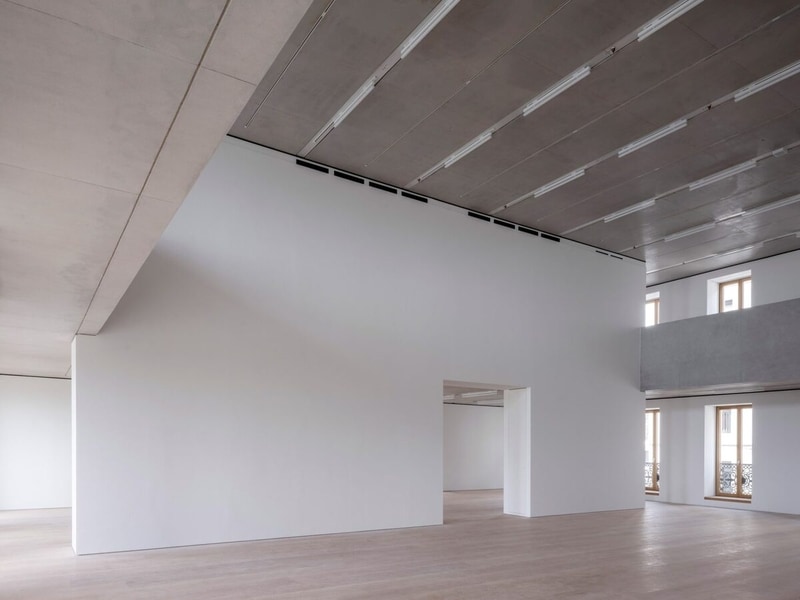
The Faro Santander transforms the former Pereda Building, once Banco Santander's headquarters, into a 10-story public museum overlooking the Santander waterfront. David Chipperfield Architects converted 10,000 square meters of office space into galleries, cultural facilities, and public amenities while preserving the historic structure and strengthening its connections between interior spaces. A central circulation spine organizes the museum around a prominent façade arch, while a sculptural exposed concrete spiral staircase and a steel rooftop pavilion distinguish the contemporary interventions from the original architecture.
The museum houses works from the Banco Santander Collection across five gallery floors alongside a café, restaurant, auditorium, rooftop terrace, and public viewpoint. Geothermal energy, green roofs, and rainwater collection systems improve the building's environmental performance
Image Credit: Juan Baraja
What's Driving This Trend
- Adaptive Reuse Museums
- Historic commercial buildings are becoming high-value cultural destinations through architectural retrofits that preserve civic identity while introducing new public revenue streams.
- Sustainable Heritage Retrofits
- Geothermal systems, green roofs, and rainwater collection are reshaping preservation projects by linking landmark conservation with measurable environmental performance.
- Corporate Collection Publicization
- Private art holdings are gaining broader relevance as financial institutions convert legacy assets into accessible cultural platforms with hospitality and event potential.
Who This Affects Most
- Museums and Galleries
- Institutional programming is expanding beyond exhibition halls as museums integrate restaurants, auditoriums, terraces, and viewpoints into multi-use visitor experiences.
- Architecture and Design
- Contemporary interventions within historic structures create differentiation for design firms specializing in sensitive preservation, spatial reorganization, and landmark modernization.
- Commercial Real Estate
- Obsolete office properties in prominent urban locations are emerging as candidates for cultural conversion that increases public access and long-term asset value.