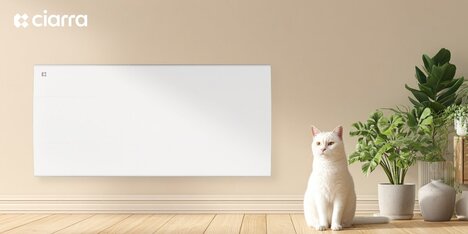
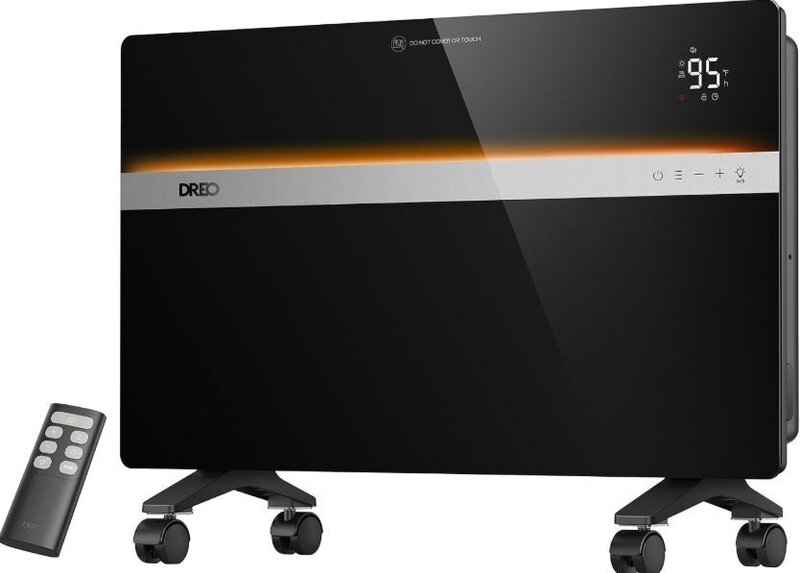
DREO's Convection Heater 711 warms home spaces without a fan, giving people who rely on space heaters a quieter way to stay comfortable as weather turns colder. The 1500W room heater uses an aluminum heating element and pairs touch controls with a backlit remote, so adjustments do not have to happen at the unit.
A 24-hour timer lets users set heat around sleep or time away instead of switching it on and off by hand. Wheels and a carry handle also make it easier to move from room to room, which matters more when one heater is covering several parts of a home.
Fanless heating shifts the category toward comfort appliances that can stay in quieter rooms without adding motor noise. The 24-hour timer turns a space heater into something closer to scheduled climate control, widening its appeal for households that want warmth to fit a routine.
Image Credit: DREO
Why This Trend Is Growing
- Quiet Climate Appliances
- Noise-free heating formats create openings for comfort products designed around bedrooms, offices, and shared spaces where acoustic calm is part of the value proposition.
- Scheduled Home Warmth
- Timer-based operation reframes portable heaters as routine-based climate tools that support energy-conscious comfort without requiring constant manual control.
- Portable Room Zoning
- Movable heating devices point to demand for room-by-room comfort solutions that reduce reliance on whole-home systems while matching flexible household patterns.
Industries Being Reshaped
- Home Appliances
- Fanless convection designs introduce differentiation in a crowded heater market through quieter operation, remote usability, and routine-friendly controls.
- Smart Home
- Scheduled warmth features signal potential for connected climate ecosystems that coordinate portable devices with occupancy, sleep, and energy-use behaviors.
- Residential Energy
- Room-specific heating products highlight opportunities for efficiency-focused alternatives that complement central heating and respond to rising household utility concerns.