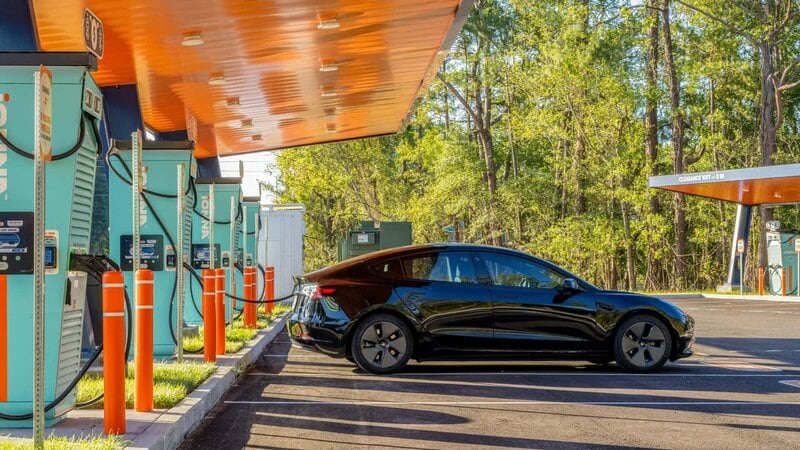
Ionna brought automatic charging to Tesla drivers through ‘Presto Charging,’ so connecting the cable starts a session and bills a saved payment method after a one-time app setup. The ‘Autocharge’ option works at Ionna sites and removes the need to approve payment on later visits.
Presto fills the gap left by Ionna’s lack of a dedicated app and already groups a U.S. network of more than 190,000 chargers. After an initial app-started session that validates the car, the system recognizes the vehicle through its charging-port network address rather than a Plug & Charge certificate.
Ionna shows how a free first Autocharge session can give Tesla owners a low-risk reason to test the network while Presto’s background billing and stored charging history make a network without its own app a more practical repeat-stop option.
Image Credit: Ionna
What's Driving This Trend
- Automatic EV Charging
- Cable-triggered sessions and stored payment credentials reduce friction at public chargers, creating room for networks to compete on seamless repeat-use experiences rather than proprietary apps.
- App-less Mobility Payments
- Background billing tied to vehicle recognition makes charging networks more accessible, opening possibilities for cross-platform payment layers that sit above fragmented infrastructure.
- Interoperable Charging Access
- Vehicle-based identification across charging sites supports broader roaming models, giving drivers more confidence to use non-native networks without sacrificing convenience.
Who This Affects Most
- Electric Vehicle Infrastructure
- Public charging operators can differentiate through simplified authentication and billing systems that make third-party networks feel as effortless as home charging.
- Mobility Payments
- Stored credentials, automated settlement, and charging histories point to new financial infrastructure for recurring vehicle-based transactions across distributed networks.
- Connected Automotive Services
- Recognition through vehicle network identifiers expands the role of connected car data in enabling personalized, low-touch services beyond traditional infotainment and telematics.