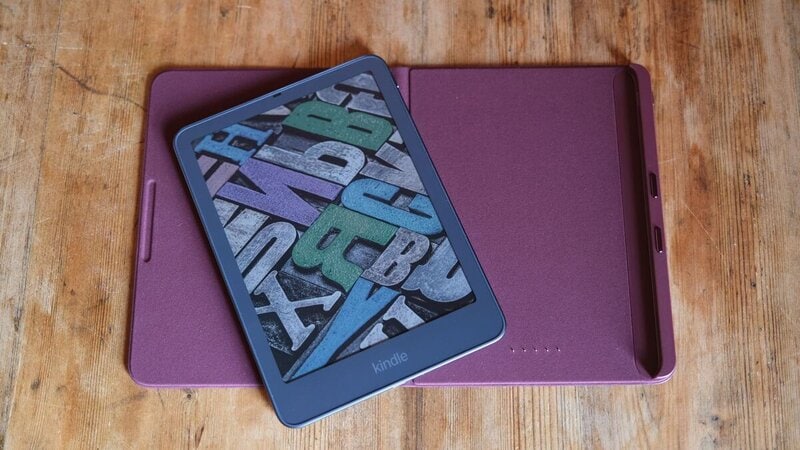
Amazon added physical buttons to a reading case with the ‘Kindle Page Turn Cover,’ letting Kindle owners move forward or back without touching the screen. Made for the new Kindle Colorsoft and Paperwhite, it attaches through a magnetic connection on the back and supports one-handed reading.
The cover pairs a vegan leatherette exterior with a soft interior that helps protect the display from scratches. In the UK it costs £74.99, and in the U.S. it costs $79.99, putting a protective case in the same price band as past Kindle sale prices.
Amazon shows how the price can turn a familiar accessory into a premium control upgrade rather than an automatic add-on, with built-in buttons that widen what readers can do with one hand even as the cost keeps that convenience aimed at buyers already committed to Amazon’s latest e-readers.
Image Credit: Future / Max Freeman-Mills
Key Themes Behind This Trend
- Button-enabled Accessories
- Physical controls embedded into familiar device add-ons create premium interaction layers for users seeking tactile, screen-free convenience.
- One-handed Reading
- Hands-limited media consumption is expanding as hardware features make digital reading more accessible during commuting, multitasking, and mobility-constrained moments.
- Premium Protective Tech
- Everyday protective cases are evolving into higher-margin feature platforms that bundle durability with added control, comfort, and device-specific utility.
Where This Applies
- Consumer Electronics
- Device ecosystems gain new revenue potential when accessories become functional extensions rather than passive protection products.
- Digital Publishing
- Enhanced reading hardware can deepen engagement by reducing friction around navigation and supporting longer, more flexible reading sessions.
- Mobile Accessories
- Accessory brands face opportunities in combining materials, ergonomics, and embedded controls to differentiate products in mature device markets.