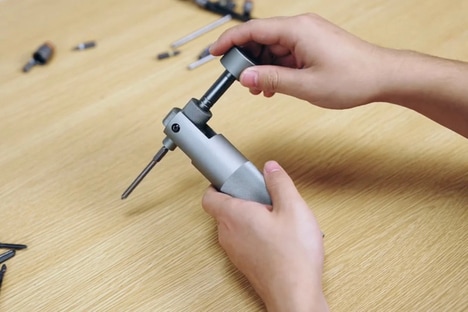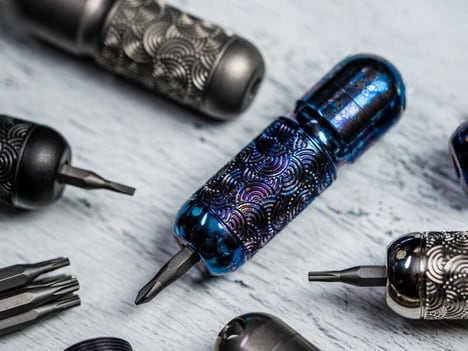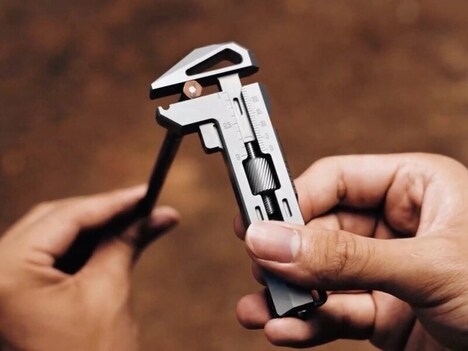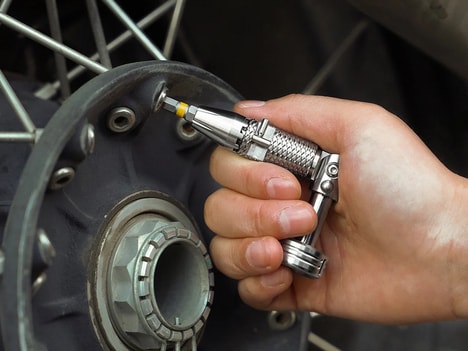
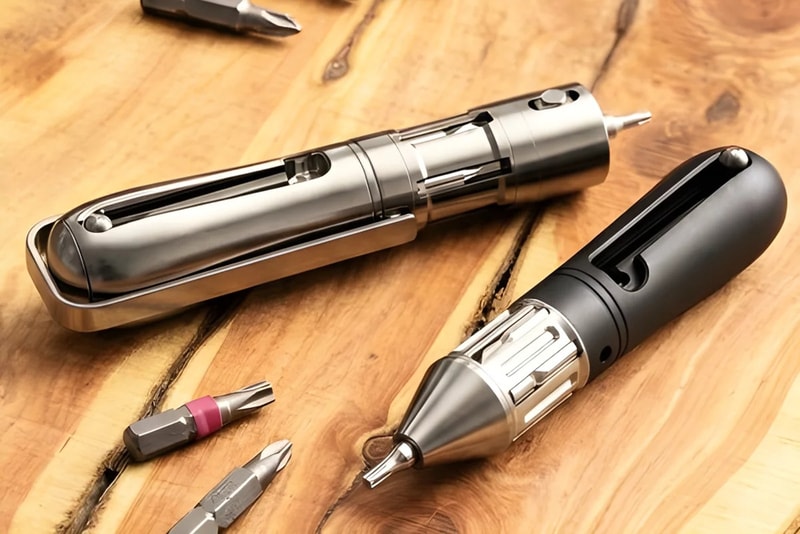
The Dream Knight is a rifle-styled ratcheting screwdriver concept launched by Chinese tool maker Cawom, featuring a revolver-like magazine that stores six quarter-inch bits and a spring-loaded bolt-action selection mechanism. It shipped on Kickstarter with two SKUs: the Basic Version with an aluminum alloy handle and stainless-steel magazine and chuck, and the Founder Plus Edition built from titanium alloy.
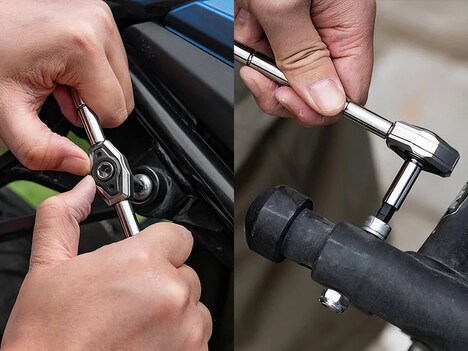
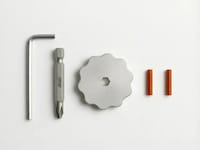
The Basic measures 143 mm long and includes an attachable T-handle arm for extra torque, while the Founder Plus is 160 mm long and adds a fold-out torque arm; included bits are two flathead, two Phillips, one Torx and one hex.
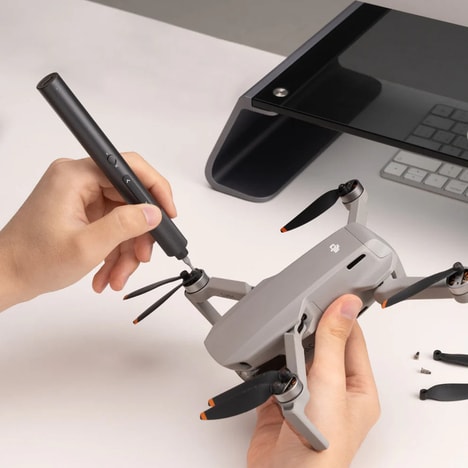
For DIYers, the Dream Knight combines compact bit storage with quick single-handed selection, making repetitive fastening faster and neater; its modular bit compatibility also lets users tailor the tool to specific repair or assembly tasks.
Image Credit: Cawom
What Makes This Trend Stand Out
- Rifle-inspired Tool Design
- Blending firearm ergonomics with hand tool function creates compact, intuitive form factors that can redefine user comfort and one-handed operation expectations.
- Revolver-magazine Bit Storage
- Integrating multi-bit rotating magazines into screwdrivers promotes faster bit changes and neater workflows, challenging traditional single-bit tool paradigms.
- Titanium and Modular Premium Tooling
- A shift toward titanium construction and modular attachments signals demand for lighter, longer-lasting tools that command premium positioning and lifecycle-based value.
Sectors Adopting This
- Handheld Power Tools
- Compact ratcheting and magazine-fed designs could disrupt expectations for torque delivery and ergonomics across cordless and manual tool categories.
- DIY Consumer Hardware
- Consumers focused on convenience and aesthetics may drive market growth for multifunctional, design-forward hand tools that combine storage and selection in a single package.
- Professional Repair and Assembly
- Service technicians and assembly line workers could see workflow efficiencies from single-handed bit selection and modular compatibility, altering toolkits and workstation layouts.