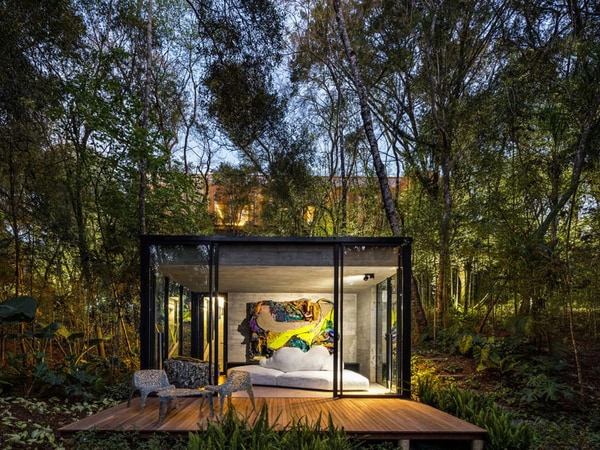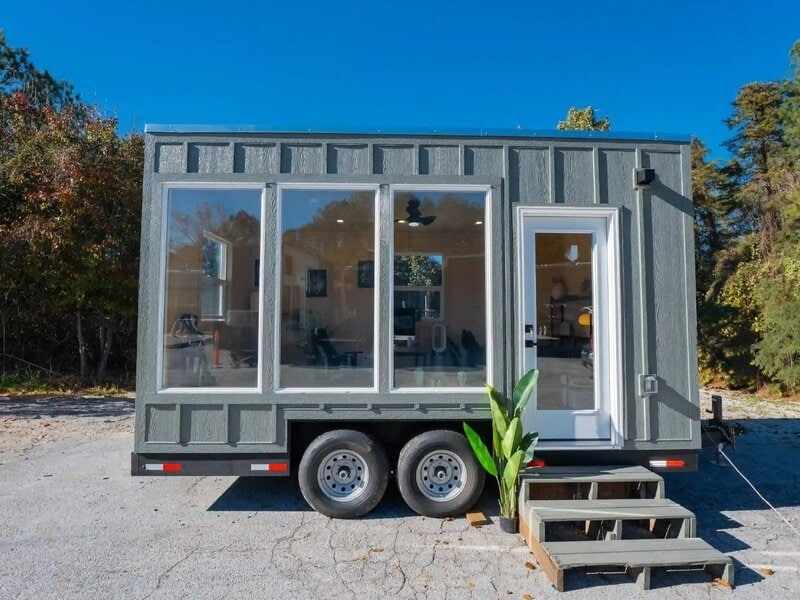
The Dragon Tiny Homes mobile office is a 16-foot unit built on a double axle trailer and designed as a standalone workspace. The interior offers about 135 square feet arranged with two desk stations, a storage cabinet and a small sofa. Full-height glazing runs along one side to bring daylight into the open plan layout, and the exterior uses engineered wood panels in a simple horizontal pattern. The ceiling is fitted with a fan for ventilation, and the space is kept free of partitions to maximise usable area.
The unit does not include a bathroom and relies on nearby facilities wherever it is parked. The base configuration can connect to household power or be adapted for off-grid setups using optional equipment. The pod is intended for backyard placement or remote work sites where a quiet dedicated workspace is needed. The layout and size allow it to be moved between locations with standard towing equipment.
Image Credit: Dragon Tiny Homes
What Makes This Trend Stand Out
- Mobile Workspaces
- The rise of compact, transportable workspaces offers flexibility for remote workers seeking on-demand office environments.
- Off-grid Office Solutions
- With the potential to be adapted for off-grid setups, these work pods cater to the increasing demand for sustainable and self-sufficient work environments.
- Daylight-integrated Designs
- Incorporating full-height glazing for natural light enhances the appeal of mobile offices, aligning with the trend towards bright, productivity-boosting work environments.
Sectors Adopting This
- Remote Work Solutions
- The expansion of remote work culture drives the need for innovative and flexible workspace options like mobile work pods.
- Tiny Homes Construction
- The design and construction of compact work pods draw directly from the tiny homes industry, showcasing an overlap of residential and commercial space concepts.
- Sustainable Energy Systems
- Adapting compact offices for off-grid energy solutions catalyzes advancements within sustainability-focused energy industries.