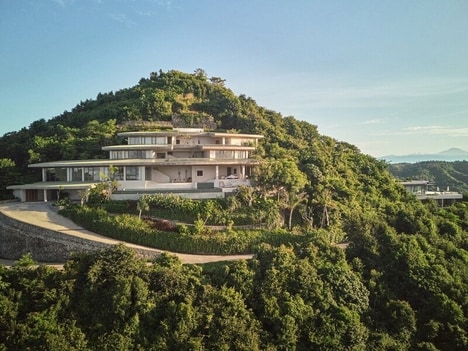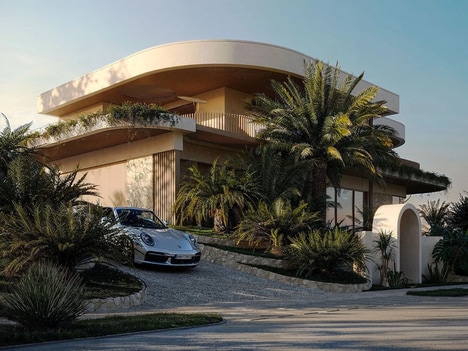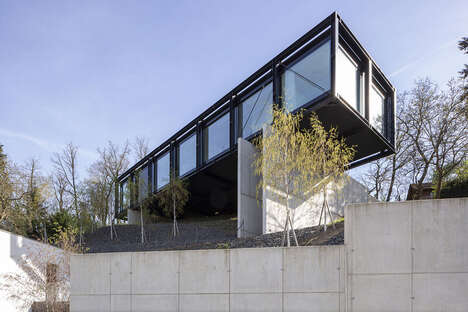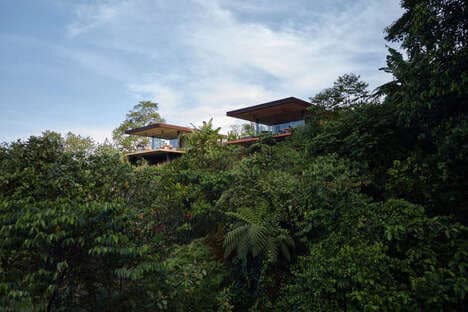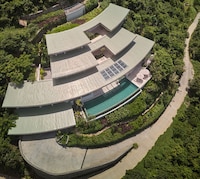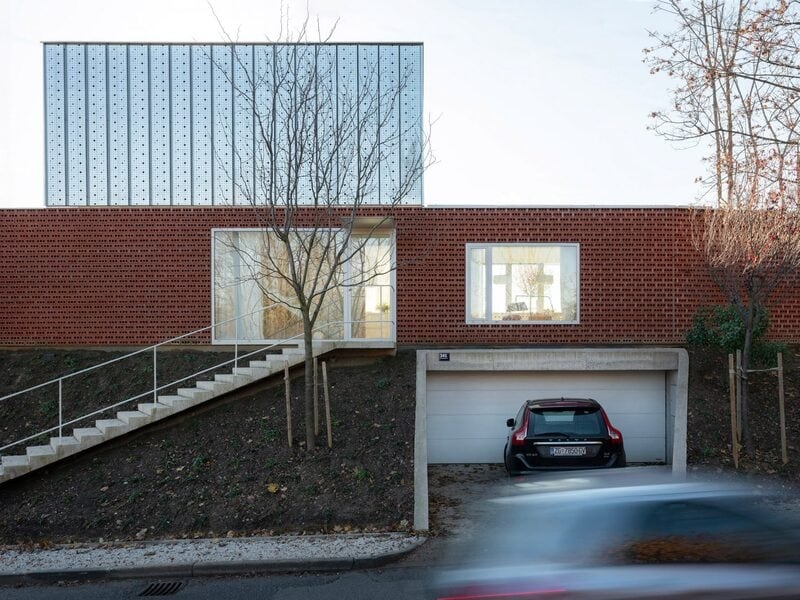
The Double Villa Bukovac explores horizontal, low‑density living in the green foothills of Zagreb, offering a counter‑model to vertical, high‑density suburban housing. The villa is designed by Njiric+Arhitekti; it consists of two side‑by‑side 180 m² units (instead of the allowed 600 m² each), arranged horizontally on adjacent lots with a shared atrium spine that serves communal functions like storage, summer kitchen, and barbecue.
Brick-clad lower volumes connect to the terrain, while upper levels are lighter, wrapped in perforated cable-tray mesh that filters light and visibility. The design draws from Palladian symmetry, Eames House spatial logic, UVA’s topographical rhythm, and LA Case Study material honesty; the villa balances privacy and openness.
A street-facing solid wall buffers noise and preserves solitude, while the garden-facing facade opens fully to daylight and views. The sloped site houses a subterranean garage and social exhibition space and uses passive shading and seasonal energy control. As a prototype of suburban decency, it champions spatial quality, ecological responsiveness, and community‑oriented living.
Image Credit: Bosnic+Dorotic
What Makes This Trend Stand Out
- Low-density Urban Living
- Exploring architectural designs that prioritize horizontal expansion offers a refreshing alternative to the cramped conditions of high-density urban environments.
- Eco-responsive Architecture
- Integrating passive sunlight management and energy-efficient features reflects a growing emphasis on sustainable living solutions in residential design.
- Community-oriented Design
- Incorporating shared spaces like atriums demonstrates a shift towards fostering community engagement and interaction within residential properties.
Sectors Adopting This
- Residential Architecture
- The trend towards low-density villas offers new avenues for innovation in design that blend privacy with community integration.
- Sustainable Construction
- The focus on ecological responsiveness is driving demand for construction materials and techniques that minimize environmental impact.
- Real Estate Development
- Real estate developments embracing horizontal expansion can redefine suburban housing by offering eco-friendly and community-focused living solutions.