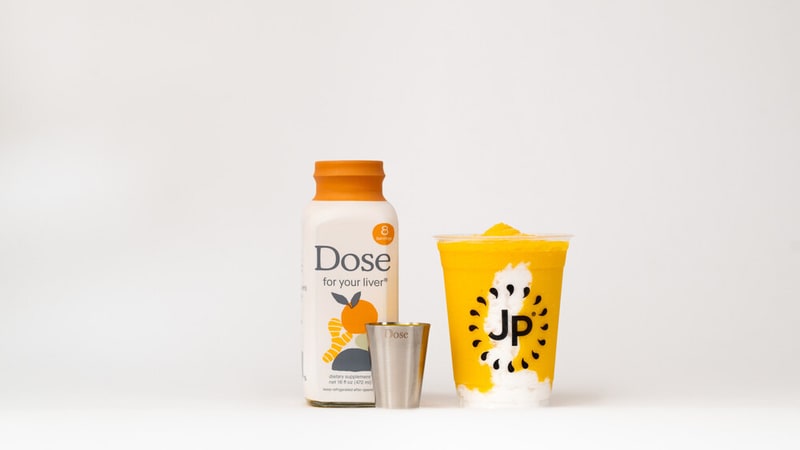
Dose — a clinically-backed supplement brand that formulates liquid products for core body systems — has partnered with Juice Press to create a limited-time smoothie called the Dose of Vitality. This offering is available at all Juice Press locations nationwide throughout May 2026.
Each Dose of Vitality smoothie contains a two-ounce shot of Dose's hero formula — Dose for your Liver — which is then blended with mango, passionfruit, ginger, lemon juice, stevia, flax fibre, and a coconut whipped cream swirl. The beverage delivers a combination of functional supplementation and fruit-forward flavor.
Dose's liver support formula has been studied in a three-month randomized, double-blind, placebo-controlled clinical trial where more than 80% of participants showed positive changes in key liver enzyme markers, including ALT, AST, ALP, and GGT, after daily use, and 83% reported improvement in occasional bloating over the same period.
Image Credit: Dose x Juice Pres
What Makes This Trend Stand Out
- Functional Food Integration
- Blending clinically formulated supplements into everyday menu items creates opportunities for retail offerings that merge nutrition science with mainstream taste experiences.
- Clinically-backed Retail Collaborations
- Partnerships between supplement brands and chain outlets enable validation-driven products to reach mass consumers through trusted retail channels.
- Microdosing In-store Blends
- Incorporating small, concentrated doses of targeted formulas into single-serve beverages opens potential for personalized, convenience-focused supplementation at point of sale.
Sectors Adopting This
- Food and Beverage Retail
- Chain cafes and juice bars stand to be transformed by menu items that deliver measurable health outcomes alongside culinary appeal.
- Nutraceuticals
- Supplement companies with clinical evidence can expand beyond pills into consumable formats that compete directly in the foodservice space.
- Clinical Research and Consumer Health Tech
- Platforms that track consumer biometrics and link product efficacy to real-world outcomes could disrupt trust and regulatory approaches in personalized nutrition.