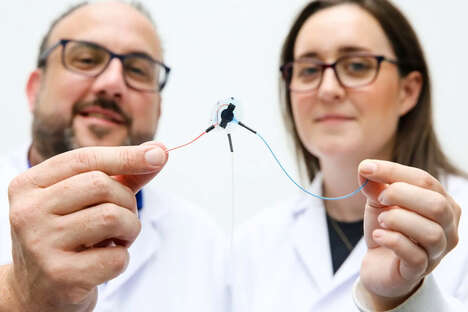
Scientists from North Carolina State University and the University of North Carolina at Chapel Hill have developed a surgical tool to dissolve blood clots, specifically the ones that lead to deep vein thrombosis (or when blood clots form within a deep vein).
The first of its kind tool uses a low frequency intravascular ultrasound, which functions like a drill mechanism to break down the clot in a more direct way than current methods allow. The tool to dissolve blood clots also has an injection tube feature. This sends micro-bubbles in the direction of the clot and makes the ultrasound waves more effective.
This is an example of those with difficult health problems can be aided by technological advancements.
Why This Trend Is Growing
- Clot-dissolving Tools
- The development of a surgical tool to dissolve blood clots presents disruptive innovation opportunities in the medical field.
- Low Frequency Intravascular Ultrasound
- The use of low frequency intravascular ultrasound as a drill mechanism for breaking down blood clots opens up possibilities for more targeted and efficient clot dissolution methods.
- Micro-bubble Injection Assistance
- The integration of micro-bubble injection in clot-dissolving tools enhances the effectiveness of ultrasound waves, offering a disruptive approach to treating deep vein thrombosis.
Industries Being Reshaped
- Medical Devices
- The development of clot-dissolving ultrasound tools creates opportunities for innovation in the medical devices industry.
- Healthcare
- The use of advanced surgical tools for clot dissolution can lead to disruptive innovations in the healthcare sector, particularly in treatments for deep vein thrombosis.
- Biotechnology
- The integration of ultrasound technology with micro-bubble injection for clot dissolution presents exciting disruptive innovation opportunities within the field of biotechnology.