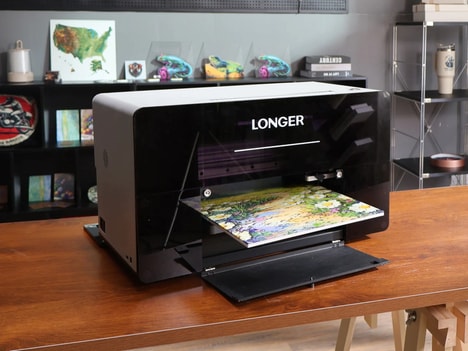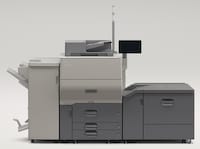
Roland DGA has launched a new UV Direct-to-Film system featuring enhanced print sheets and transfer film designed to work with its VersaOBJECT and VersaSTUDIO flatbed printers. This product is said to offer improved dimensional stability, elimination of adhesive residue, and adhesion up to two times better than competitive systems. The layered technology, on the other hand, reportedly increases workflow efficiency.
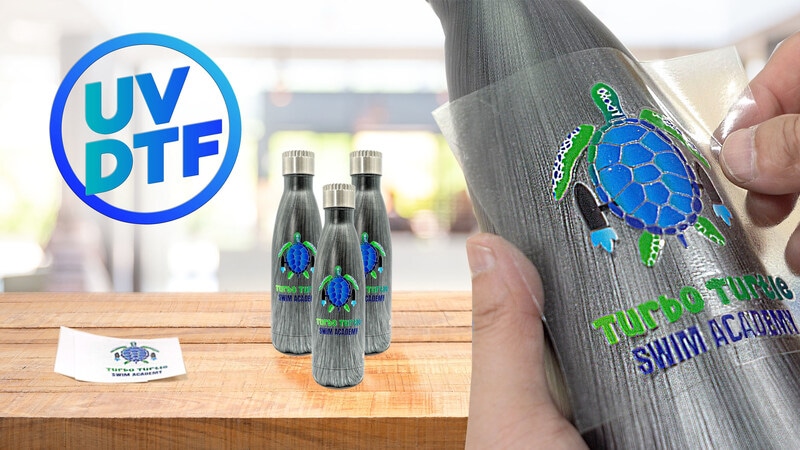
The UV Direct-to-Film system allows users to print high-impact graphics using Roland's specially formulated V-BOND or ECO-UV five inks onto transfer media, which can then be manually applied to a vast array of three-dimensional objects, including oversized, irregularly shaped, or delicate items that are difficult or impossible to print on directly. The transferred graphics are durable, scratch-resistant, and dishwasher-tested on many glass substrates.
Roland DGA's UV Direct-to-Film process involves printing the desired image onto a print sheet, overlaying transfer film, applying light manual pressure to adhere the graphic to the object, and peeling away the film.
Image Credit: Roland DGA
Why This Trend Is Growing
- Direct-to-film Adoption
- Rising use of printable transfer media enables high-fidelity graphics to be applied to complex three-dimensional and delicate surfaces without direct substrate printing.
- Layered Transfer Technology
- The combination of print sheets and overlay films that improve dimensional stability and workflow efficiency creates new possibilities for scalable, repeatable surface customization.
- Durable Low-residue Inks
- Advances in UV-curable ink formulations that deliver enhanced adhesion and minimal adhesive residue support more reliable, long-lasting decorated products across varied materials.
Industries Being Reshaped
- Promotional Products
- Companies producing branded merchandise could leverage transferable graphics to offer complex, multi-surface personalization for small runs and single-item orders.
- Glassware and Tableware
- Dishwasher-tested, scratch-resistant transfers present a route to upscale decorative treatments and limited-edition designs for premium glass and ceramic goods.
- Industrial Prototyping and Small-batch Manufacturing
- The ability to apply detailed imagery to irregular prototypes and bespoke parts without expensive tooling supports faster aesthetic iteration and market testing.