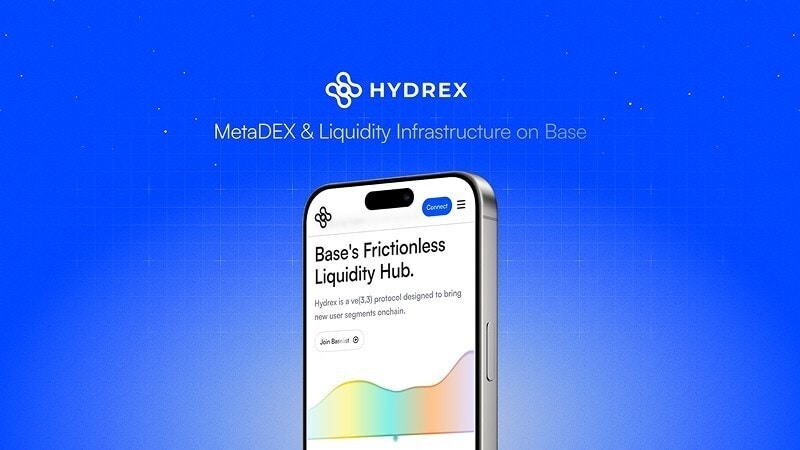
Hydrex has introduced a new decentralized financial protocol on the Base blockchain. This innovation operates under a specific legal structure known as a DUNA, which is designed to function as a non-profit entity. A defining characteristic of Hydrex's new decentralized financial protocol is its commitment to direct all fees generated by the platform back to individuals who commit their HYDX tokens to a locked staking mechanism.
The DUNA-governed protocol's design incorporates a governance model where token holders can influence how incentives are distributed to support other emerging projects within the ecosystem. This approach is intended to foster long-term alignment between the protocol's success and the broader health of the blockchain network upon which it is built. Hydrex achieves this by abstracting technical complexity for end-users and creating a sustainable economic model for liquidity provision.
Image Credit: Hydrex
What Makes This Trend Stand Out
- Stakeholder-centric Protocols
- Decentralized financial protocols are increasingly focusing on stakeholder-centric models that prioritize the redistribution of platform fees to committed token holders.
- Non-profit Governance Models
- The introduction of DUNA as a non-profit governance structure highlights a shift towards financial protocols that aim to reinvest earnings to foster ecosystem growth.
- User-friendly Blockchain Solutions
- Efforts to abstract technical complexities in decentralized financial services are paving the way for user-friendly blockchain solutions that enhance mass adoption.
Sectors Adopting This
- Blockchain Technology
- Blockchain technology continues to evolve as decentralized protocols, like those introduced by Hydrex, push the boundaries of governance and user engagement.
- Decentralized Finance (defi)
- The Decentralized Finance sector is witnessing innovation through stakeholder-focused models that aim to realign economic incentives for sustainable growth.
- Non-profit Organizations
- Non-profit organizations are finding new avenues in blockchain ecosystems by leveraging decentralized governance models to support broader network health.