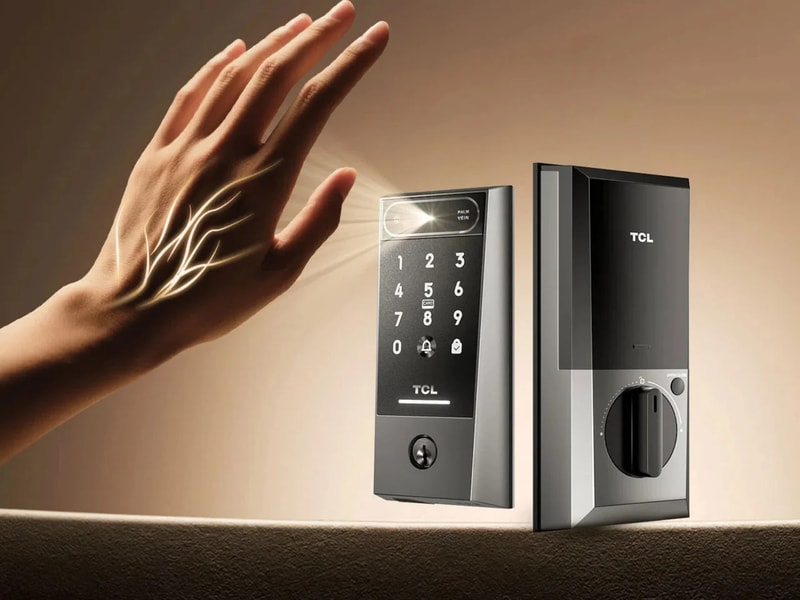
The D2 Pro is a smart lock from TCL that replaces conventional access methods with palm vein recognition technology. Using infrared light, the system scans vein patterns beneath the skin to verify identity without requiring fingerprints, PIN codes, or key cards. TCL states that the lock can recognize a registered user in 0.3 seconds and incorporates liveness detection to prevent unauthorized access attempts. Recognition data is stored locally on the device, and on-device AI updates user profiles over time to improve accuracy.
The lock supports multiple access methods, including palm vein recognition, key cards, a physical key, and a keypad. Through the TCL Home app, users can register household members, manage permissions, and receive entry notifications. The D2 Pro is housed in an aerospace-grade aluminum alloy body. A Matter-compatible version supports Apple Home, Amazon Alexa, and Google Assistant integration.
Image Credit: TCL
Why This Trend Is Growing
- Palm Vein Authentication
- Infrared vein scanning introduces a more private biometric layer for home access, creating room for security systems that reduce reliance on fingerprints, PINs, cards, and physical keys.
- On-device Identity AI
- Local profile updating and recognition data storage make smart locks more adaptive while supporting privacy-focused product designs that avoid constant cloud dependence.
- Matter-compatible Security
- Interoperable smart lock connectivity links biometric access with major home ecosystems, expanding the potential for unified residential security experiences across devices and platforms.
Industries Being Reshaped
- Smart Home Technology
- Biometric entry systems are reshaping connected homes by turning door locks into intelligent access hubs with app-based permissions, notifications, and automation compatibility.
- Residential Security
- Liveness detection and sub-second recognition add a new standard for anti-spoofing protection, strengthening demand for consumer-grade security products with enterprise-style authentication.
- Biometrics
- Palm vein recognition broadens biometric adoption beyond phones and workplaces, positioning contactless identity verification as a practical feature for everyday household infrastructure.