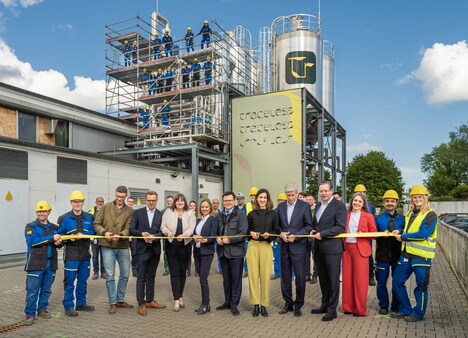
GR3N, a Lugano-based cleantech company, announced a €15.5 million Series B round to accelerate construction of MODUS, which it describes as the world’s first industrial plant based on microwave-assisted depolymerisation technology for PET recycling. The funding will support development of the facility in Spain and further advance the company’s proprietary MADE (Microwave Assisted DEpolymerisation) process for recycling PET and polyester waste streams.
GR3N says its patented technology can process PET waste from packaging, textiles, films and coloured resins, producing food-grade monomers that can be recycled repeatedly without loss of performance. The planned MODUS facility is expected to have a capacity of 40,000 tonnes per year and is being developed in partnership with Intecsa Industrial. The project has also secured a €35 million grant agreement under the EU Innovation Fund.
For brands and consumers, the facility could help expand the supply of recycled PET and support circular manufacturing goals as regulatory requirements for recycled content continue to increase.
Image Credit: GR3N
Why This Trend Is Growing
- Microwave Depolymerization
- Industrial microwave-assisted chemistry creates new pathways for breaking down mixed PET and polyester waste into reusable monomers at commercial scale.
- Food-grade Circular Plastics
- Repeated recycling without performance loss expands the potential supply of compliant recycled PET for packaging brands facing stricter recycled-content mandates.
- Textile-to-plastic Recycling
- Polyester-rich textiles, films, coloured resins and packaging waste become higher-value feedstocks as advanced recycling systems handle streams that mechanical processes often reject.
Industries Being Reshaped
- Plastic Recycling
- Chemical recycling infrastructure reshapes waste management economics by converting difficult PET streams into virgin-equivalent inputs for circular manufacturing.
- Packaging
- Rising access to food-grade recycled monomers supports packaging producers seeking lower-carbon materials that satisfy regulatory and brand sustainability requirements.
- Apparel and Textiles
- Large volumes of polyester waste gain new relevance as depolymerization plants connect fashion supply chains with closed-loop material recovery.