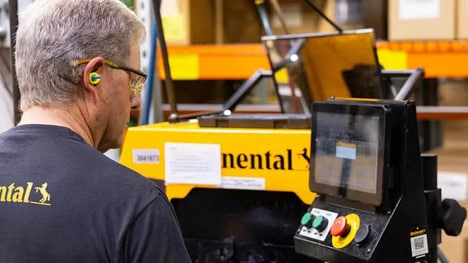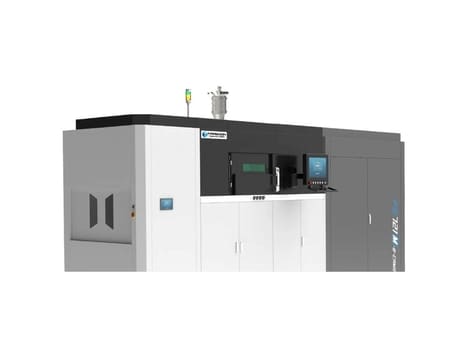
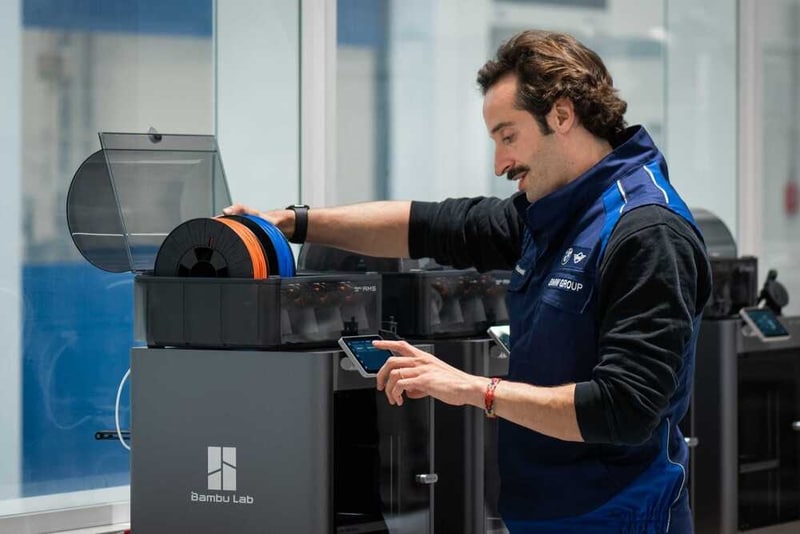
Since 2018, BMW Group has been quietly building out a closed-loop recycling system at its Additive Manufacturing Campus in Oberschleißheim — one that now processes up to 12 tonnes of waste 3D printing powder annually. The recovered material gets converted into filament and granulate used across BMW's global production network via Fused Filament Fabrication and Fused Granulate Fabrication technologies. What started as a PET bottle upcycling pilot called "bottleUP" has scaled into a full manufacturing input stream, with the Campus now supplying other facilities with recycled filament, validated printing parameters, and technical training.
The output is concrete and plant-wide. Every BMW Group facility now runs 3D printers producing several hundred thousand components per year — ergonomic worker aids, scratch protection, assembly gauges, magnetic screw holders, and chassis support components among them. The Campus functions less like an R&D experiment and more like an internal supplier, embedding recycled material into everyday production rather than treating sustainability as a separate initiative.
Image Credit: BMW
Why This Trend Is Growing
- Closed-loop Additive Manufacturing
- Repurposing print waste into validated feedstock creates potential for manufacturing ecosystems that minimize raw material purchases and trace material provenance across production sites.
- Upcycled Filament Supply Chains
- The scaling of bottle-upcycling into standardized filament and granulate suggests new supplier models built around recycled polymer qualification and material-as-a-service contracts.
- Distributed In-house Production Networks
- Embedding validated 3D printing capabilities and recycled inputs across multiple facilities indicates opportunities for resilient, localized production that shortens lead times and reduces external dependencies.
Industries Being Reshaped
- Automotive Manufacturing
- Widespread use of recycled 3D printing materials points to assembly lines and parts supply chains that can adopt circular inputs for lower cost and improved sustainability reporting.
- Industrial Tooling and Fixtures
- On-demand manufacture of ergonomic aids and jigs from certified recycled filament shows potential for customized, low-volume tooling programs with rapid iteration and material reuse.
- Sustainable Packaging and Materials
- Converting PET and other waste streams into validated production-grade polymers suggests new markets for high-value recycled resins and branded circular-material offerings.