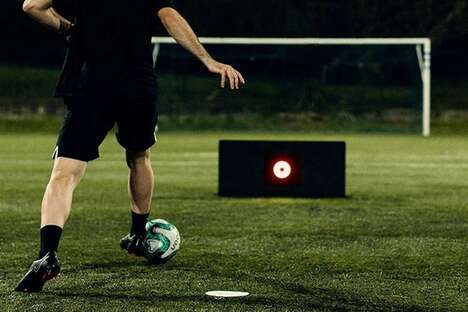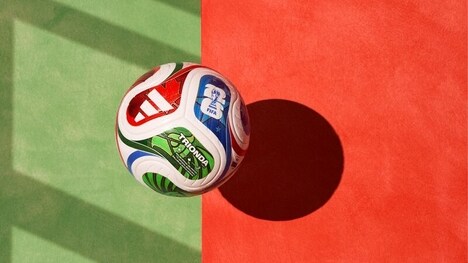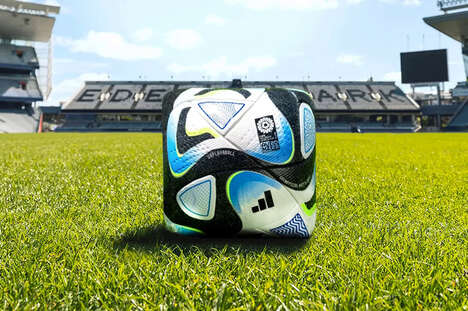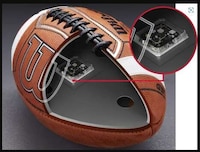

adidas is bringing smart, connected soccer balls to professional sports through its latest line of inertial measurement unit (IMU)-equipped equipment. This sensor has a 500Hz inertial measurement unit and polling rate, ensuring accurate measurements for all motions the ball takes.
The IMU is embedded in the ball and does not affect the performance of the ball. According to adidas, the technology does not interfere with weight or performance in any way, with perfect equality of results when compared to traditional soccer balls. As a result of this, the ball does not have any charging ports, meaning the IMU sensor can only be charged through wireless energy induction.
This soccer ball is the result of professional collaboration between adidas, FIFA, and KINEXON, leaders in state-of-the-art sensor network and edge computing.
Image Credit: adidas
Key Themes Behind This Trend
- Connected Soccer Balls
- adidas is bringing smart, connected soccer balls to professional sports through its latest line of inertial measurement unit (IMU)-equipped equipment.
- 500hz IMU Sensor
- The IMU sensor embedded in the ball has a 500Hz inertial measurement unit and polling rate, ensuring accurate measurements for all motions the ball takes.
- Wireless Energy Induction
- The IMU sensor can only be charged through wireless energy induction, removing the need for charging ports on the ball.
Where This Applies
- Sports Equipment Manufacturing
- The trend of connected soccer balls creates opportunities for sports equipment manufacturers to integrate smart technologies into their products.
- Sensor Technology
- The development of the 500Hz IMU sensor opens up opportunities for advancements in sensor technology for various industries beyond sports.
- Wireless Charging
- The use of wireless energy induction to charge the IMU sensor in the soccer ball presents disruptive innovation opportunities for wireless charging technology providers.