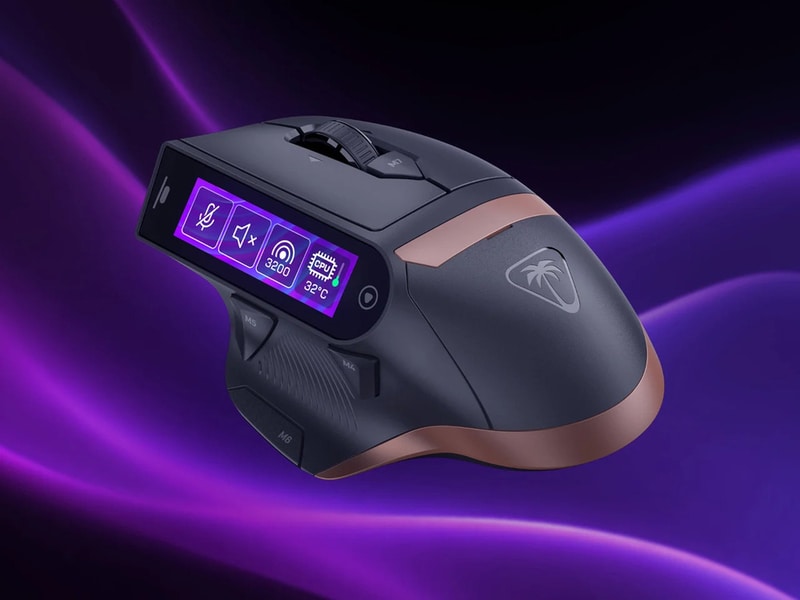
Turtle Beach’s Command Series is a lineup of gaming peripherals that integrates touch displays directly into input devices, including the KB7 and KB5 keyboards and the MC7 wireless mouse. Each product features a built-in Command Touch Display positioned where hands naturally rest, allowing users to control functions without switching screens. The KB7 includes a 4.3-inch display, while the KB5 offers a smaller 2.4-inch version, both supporting tasks such as macro triggering, profile switching, audio adjustment, and OBS scene control.
The MC7 mouse incorporates a 2.25-inch touchscreen within the grip area, enabling on-the-fly adjustments such as DPI changes, profile selection, and application control without interrupting gameplay. Hardware across the lineup includes features such as Hall Effect switches, 8K polling rates, and low-latency performance tuned for gaming and streaming workflows. The devices are designed to consolidate multiple control interfaces into a single interaction point across keyboards and mouse.
Image Credit: Turtle Beach
Key Themes Behind This Trend
- Embedded Touch Controls
- On-device touchscreens in input peripherals enable compact, uninterrupted control ecosystems that can displace secondary control hardware and software overlays.
- Contextual Micro Displays
- Small, purpose-driven displays surface context-aware information and controls at the point of interaction, reducing reliance on main-screen UIs and streamlining user flows.
- Consolidated Control Surfaces
- Combining multiple function interfaces into single peripherals creates unified interaction hubs that can redefine device ergonomics and workflow architectures.
Where This Applies
- Gaming Peripherals
- Peripheral makers can redefine competitive and casual play by embedding adaptive displays and controls that shift device value from raw specs to integrated user experience.
- Live Streaming and Content Creation
- Streamers and creators stand to benefit from on-device scene, audio, and macro management that minimizes workflow friction and lowers barriers to multi-source production.
- Human Computer Interaction
- HCI research and product teams may explore new input paradigms centered on tactile-display hybrids that alter interaction models and accessibility approaches.