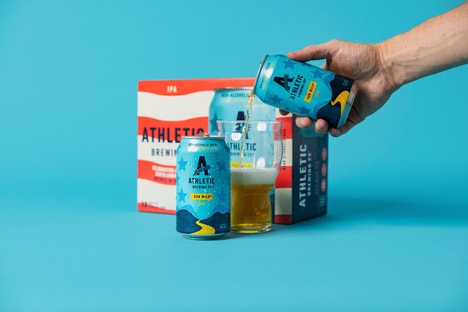
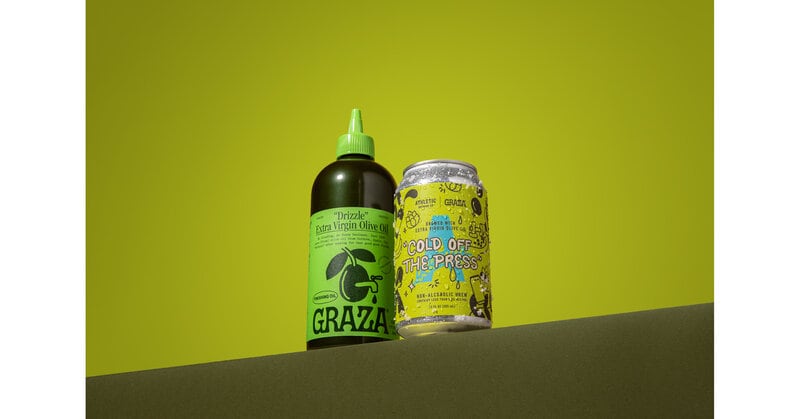
Athletic Brewing and Graza are exploring olive oil-brewed beers with Cold Off The Press, a limited-edition non-alcoholic pils that incorporates extra virgin olive oil during production. Rather than giving the beverage an olive oil flavor, Graza Extra Virgin Olive Oil is used to nourish the yeast during brewing. The resulting pils features floral, herbal and lemon aromas with a clean, dry finish. Each 12-ounce can contains less than 0.5% ABV and 60 calories.
For Athletic Brewing, the collaboration provides an unexpected way to differentiate its non-alcoholic portfolio while connecting beer with culinary culture. Graza gains an opportunity to demonstrate the versatility of olive oil beyond conventional cooking applications. The limited release can also generate urgency and online engagement for both brands, while its food-pairing positioning gives consumers another occasion to incorporate non-alcoholic beer into meals, gatherings and entertaining.
Image Credit: Athletic Brewing Company
What's Driving This Trend
- Culinary Brewing
- Food-led brewing techniques are expanding flavor development and brand storytelling by turning pantry ingredients into functional production inputs rather than simple taste additives.
- Non-alcoholic Pairings
- Meal-friendly alcohol alternatives are creating new occasions for premium non-alcoholic beverages across dining, entertaining and wellness-conscious social settings.
- Functional Fermentation Inputs
- Ingredient use in fermentation is moving beyond flavoring toward process enhancement, enabling beverages to differentiate through production science and cross-category ingredient credibility.
Who This Affects Most
- Non-alcoholic Beverages
- Premium collaborations and limited releases are giving alcohol-free brands new ways to compete on craft, scarcity and culinary relevance.
- Specialty Food
- Olive oil and other premium pantry products are gaining cultural reach through unconventional applications that reposition them as lifestyle ingredients.
- Craft Beer
- Brewing innovation is being reshaped by low-ABV demand, culinary partnerships and experimental techniques that broaden beer’s role in everyday consumption.