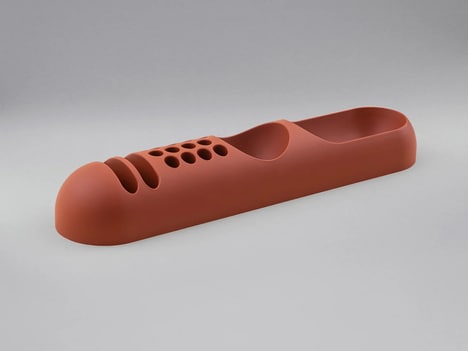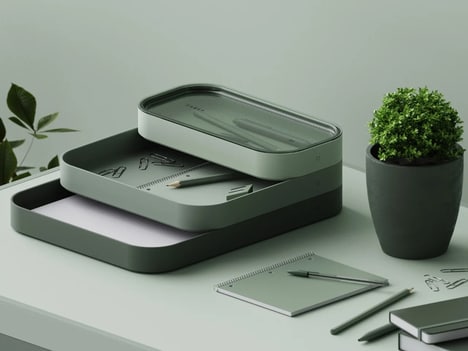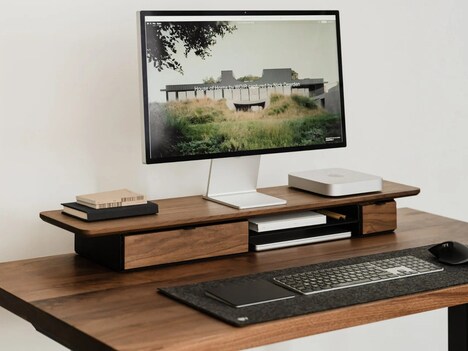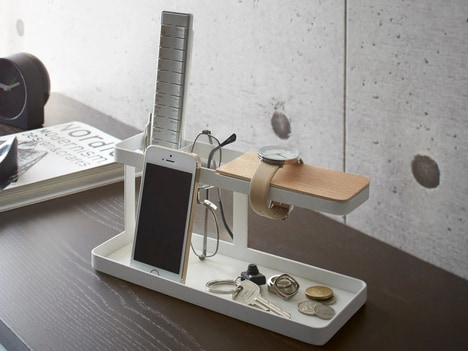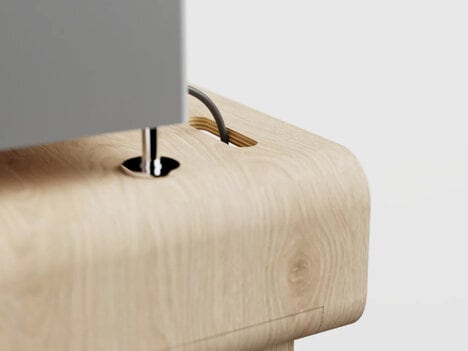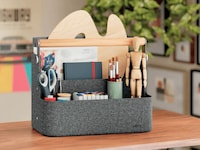
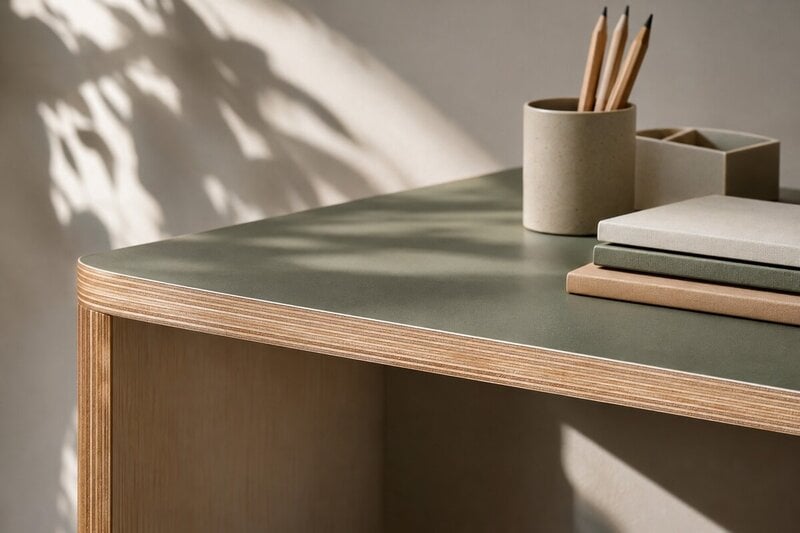
Dezinobjects has reworked the traditional desk with Backup, a design that uses built-in levels to create a more structured working surface. Instead of one uninterrupted tabletop, the desk features distinct sections intended to help users keep their work area organised without relying on separate storage accessories.
The design is made from stacked plywood panels topped with a layer of linoleum, giving the desk a simple material palette that highlights its tiered construction. The different levels divide the surface into separate zones, creating dedicated areas for work equipment and everyday items.
By building organisation into the furniture itself, Backup offers an alternative to the conventional flat desktop, with its layout helping define how users arrange their workspace.
Image Credit: AI-generated
What's Driving This Trend
- Built-in Workspace Zoning
- Tiered surfaces and embedded compartments signal opportunities for office furniture that shapes user behavior through intuitive spatial organization.
- Accessory-free Desk Design
- Integrated storage logic reduces dependence on add-on organizers, opening space for streamlined products that combine function, aesthetics, and clutter control.
- Material-minimal Productivity Furniture
- Simple plywood and linoleum constructions reflect demand for durable, understated work tools that support focus while lowering visual complexity.
Who This Affects Most
- Office Furniture
- Furniture brands can explore structured desktops that embed organization directly into workstations for hybrid workers and compact offices.
- Interior Design
- Workspace planners gain potential from layouts where furniture itself defines zones, supporting cleaner environments without adding more objects.
- Workplace Productivity
- Productivity-focused solutions may evolve beyond software into physical systems that guide routines, reduce distraction, and improve task flow.