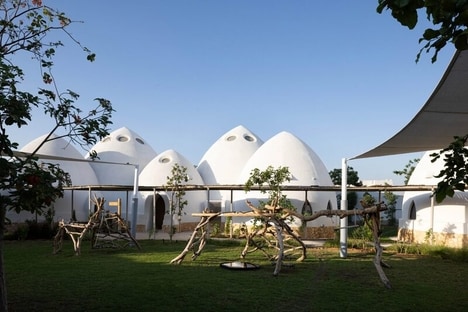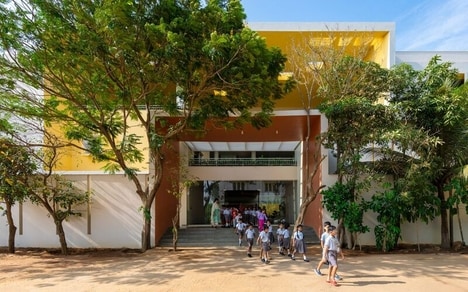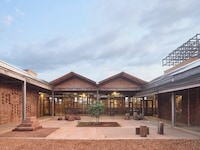


Kampala-based practice Localworks challenges conventional classroom design with the newly built Mustardseed Junior School. Located in the town of Sentema in Uganda, the budding spans 1,146 square meters and it houses both a kindergarten and a primary school.
The classroom design is unique, mainly due to the materials that Localworks used to build the school. Earthbags—these are bags filled with soil—were used for the walls of the Mustardseed Junior School. Because of this, no two rooms at the educational institution are the same, "which means students have a changing learning environment as they progress and move from classroom to classroom." The walls are finished with lime-earth render, left unpainted to contribute to the organic feel of the classroom design. The material choice also promoted Localworks to use curves "in order to avoid buttresses."
Image Credit: Will Boase Photography
What's Driving This Trend
- Organic Architecture
- Designing structures that utilize natural forms and materials, such as earthbags, could create new opportunities for sustainable and cost-effective building in the construction industry.
- Flexible Learning Environments
- Creating interchangeable learning spaces within a building, such as those achieved through Localworks' use of earthbags, could allow for more adaptable educational environments suited to the needs of individual students and teachers.
- Community-driven Design
- Incorporating materials and design features suggested by members of the communities where buildings are situated, as Localworks did with the Mustardseed Junior School, could lead to greater social and cultural integration when building structures in the education industry.
Who This Affects Most
- Construction
- Incorporating sustainable and cost-effective building techniques such as those used in the construction of the Mustardseed Junior School could lead to the development of more environmentally friendly and affordable building practices.
- Education
- Designing flexible learning environments that can adapt to the needs of both teachers and students could create new opportunities for educational institutions to better facilitate individualized learning and teaching methods.
- Architecture
- Community-driven design involving the input of local communities could lead to more culturally integrated and efficient building practices in the architecture industry.