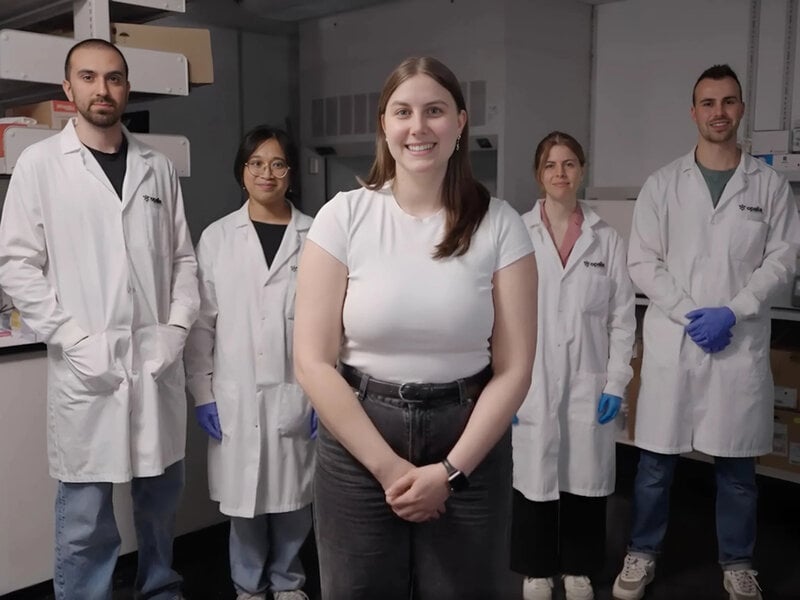
Opalia is moving its cell-based whole milk into Hoogwegt's first purchase next month, giving the Dutch dairy buyer material to test in cheese and butter, either as a complete swap or in a blended recipe. The batch changes hands at Fi Europe in Frankfurt on November 17, 2026.
Its process uses bovine mammary cells to produce whole milk, so Hoogwegt can assess a finished dairy input instead of a single component. Opalia is also building a Montreal bioreactor sized to one cow's output, or 28 liters a day, and plans a Canadian regulatory filing in mid-2027.
A finished milk stream that can go into blended or all-cell-based formulations broadens the animal-free dairy pitch for processors that already work with standard dairy supply chains. A 28-liter-a-day pilot line turns the project from a lab proof into a sourcing test for companies weighing future cheese and butter lines.
Image Credit: Opalia
What Makes This Trend Stand Out
- Cell-based Whole Milk
- Finished milk streams from bovine mammary cells create new space for animal-free dairy products that behave more like conventional inputs in cheese and butter manufacturing.
- Hybrid Dairy Formulations
- Blended recipes combining traditional and cell-based milk could give processors a transitional path toward lower-impact dairy without abandoning familiar production systems.
- Pilot-scale Bioreactors
- Small commercial bioreactors sized around real agricultural output make cellular agriculture easier for buyers to evaluate as a practical sourcing model.
Sectors Adopting This
- Dairy Processing
- Cheese, butter, and ingredient manufacturers may gain access to animal-free whole milk inputs that fit existing formulation and supply-chain requirements.
- Food Biotechnology
- Cell-culture platforms for complete dairy streams signal a shift from isolated proteins toward more complex, functional food ingredients.
- Alternative Proteins
- Animal-free dairy expands the alternative protein market beyond meat analogs by offering familiar staples with new production economics and sustainability profiles.