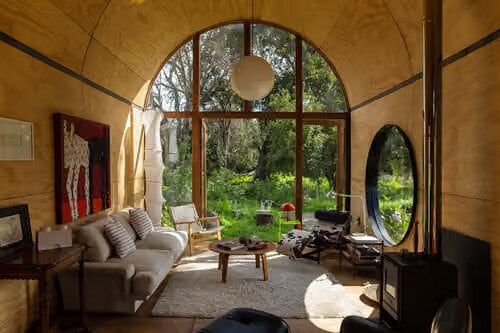
The Catalejo House is a micro-house by Tololo Ugarte located in Limache, Chile, within a landscape of centuries-old quillay and molle trees. Conceived as a "spyglass" residence, the project is organized beneath a circular vaulted roof constructed from steel and timber that creates a double-height interior. Large openings frame changing views of the surrounding vegetation, allowing seasonal shifts between the dry summer landscape and the dense winter and spring growth to become part of the home's spatial experience. The compact layout emphasizes uninterrupted visual connections between the interior and the natural setting.
Material selection focuses on reducing the building's visual impact by blending the structure into its surroundings through finishes that echo the site's colors and textures. The design preserves the prominence of the ancient trees while using the architecture to highlight their scale and changing character throughout the year. Rather than separating indoor and outdoor spaces, the residence treats the surrounding landscape as a central architectural element, with each opening presenting a distinct perspective across the protected grove.
Image Credit: Mauricio Duarte Arratia, hypebeast
Key Themes Behind This Trend
- Spyglass Micro-homes
- Compact residences with framed sightlines show potential for differentiated small-footprint living that treats views and seasonal change as core spatial features.
- Vaulted Timber-steel Shells
- Hybrid structural envelopes can create dramatic interior volume in tiny homes while supporting prefabricated, design-forward construction models.
- Landscape-led Architecture
- Nature-integrated layouts reveal opportunities for homes that minimize visual intrusion and turn existing ecosystems into defining design assets.
Where This Applies
- Residential Architecture
- Boutique housing studios can explore micro-dwellings that combine sculptural form, compact efficiency and immersive environmental framing.
- Sustainable Construction
- Low-impact material strategies point to new building systems that blend with sensitive landscapes while reducing ecological and visual disruption.
- Eco-tourism
- Architectural micro-retreats in protected natural settings offer hospitality brands distinctive accommodations centered on privacy, scenery and seasonal immersion.