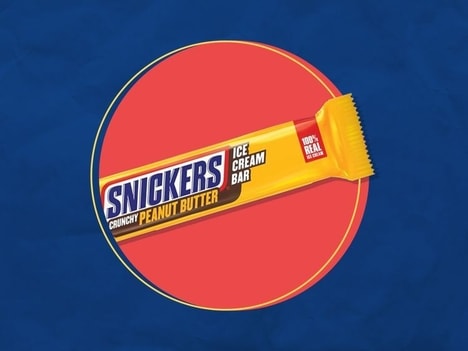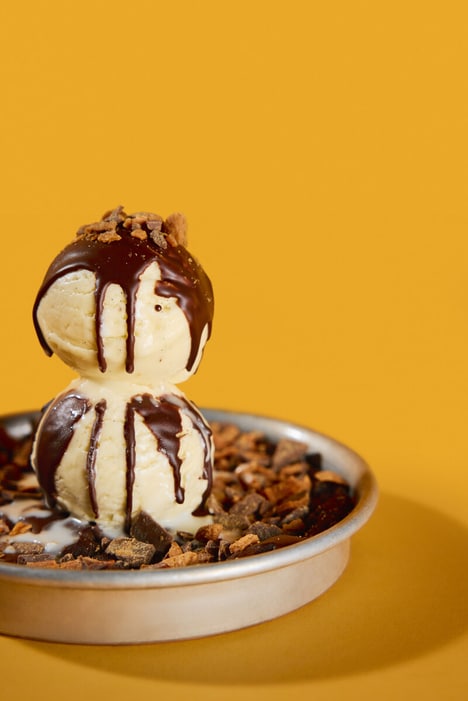
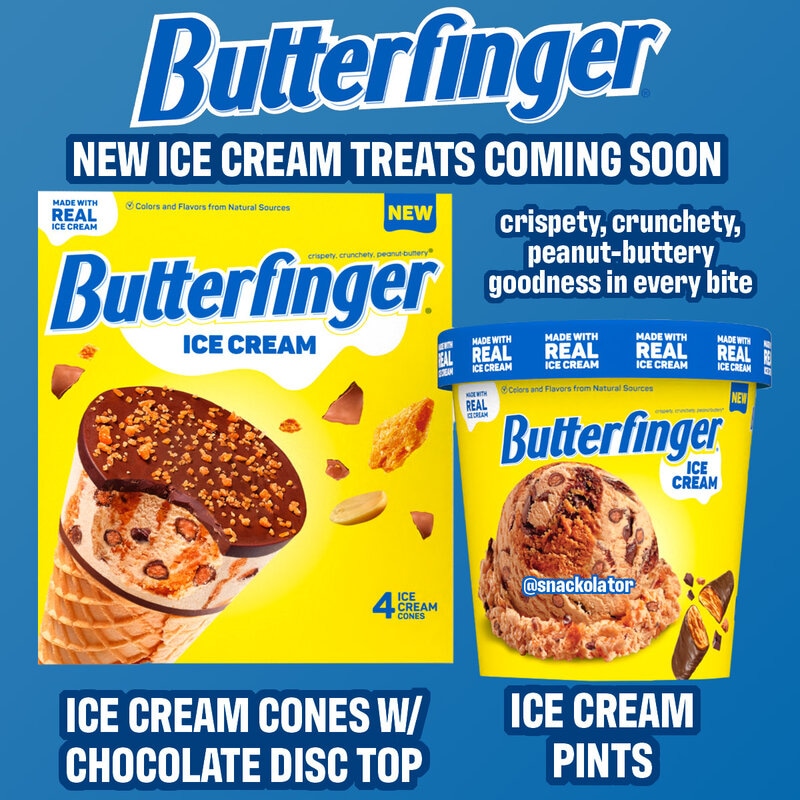
Butterfinger is expanding its frozen treats lineup with new cones and pints arriving in late 2026. The lineup turns the candy bar’s peanut-buttery crunch into a dessert format people can enjoy straight from the freezer, with cones finished with a chocolate disc and pints built around a Butterfinger swirl. It gives the brand two easy ways to translate a familiar candy flavor into ice cream.
The cones lean into a crisp bite and a neat top layer, which helps the treat feel more like a composed dessert than a simple novelty. The pints shift that same flavor into a scoopable format for at-home snacking, sharing, or topping other sweets. Together, they stretch one candy profile across two common ice cream occasions.
For shoppers, this means Butterfinger now works in both handheld and bowl-ready forms. Candy brands that already have a strong flavor identity can use frozen desserts to keep that taste in rotation longer and in a more flexible format.
Image Credit: @snackolator
What Makes This Trend Stand Out
- Candy-brand Freezer Extensions
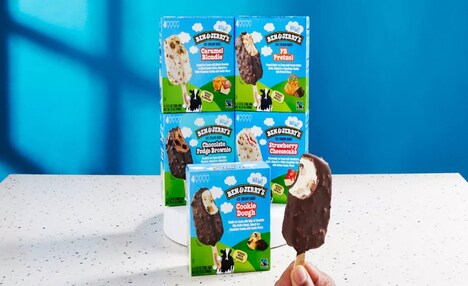
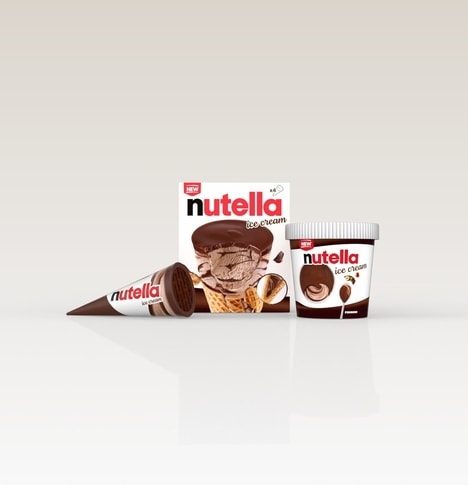
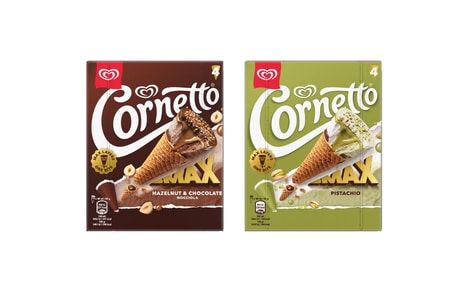
- Familiar confectionery flavors are moving into frozen formats, creating space for legacy candy brands to expand consumption occasions beyond the candy aisle.
- Multi-format Flavor Licensing
- Iconic taste profiles translated across cones, pints, and toppings signal new value in licensing recognizable flavors for varied dessert rituals.
- Textural Dessert Experiences
- Crunchy inclusions, swirls, and chocolate layers are elevating frozen novelties through sensory contrast that differentiates premium impulse treats.
Sectors Adopting This
- Frozen Desserts
- Brand-led pints and handheld novelties are reshaping freezer shelves with products built around recognizable flavors and hybrid dessert formats.
- Confectionery
- Candy makers are finding new relevance by extending signature textures and flavors into adjacent categories that support year-round snacking.
- Grocery Retail
- Freezer aisle innovation is becoming a destination for cross-category collaborations that increase basket variety and seasonal shopper engagement.