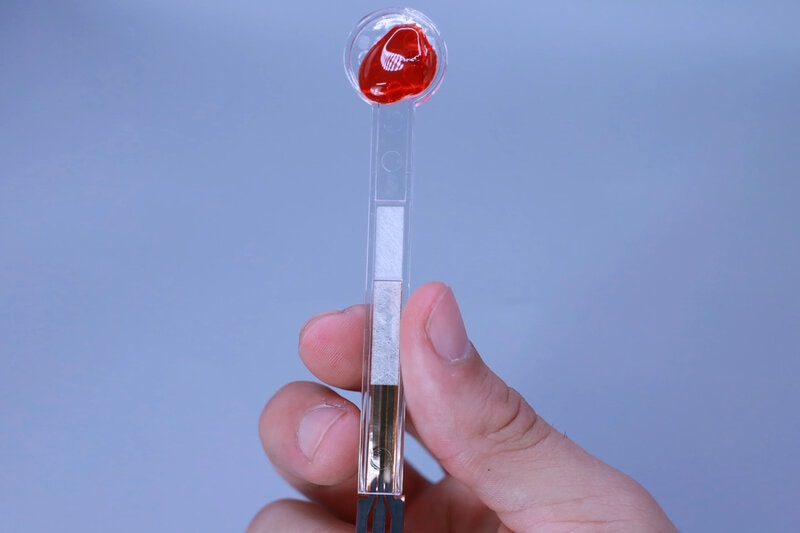
USC created ‘Lollylab’ to turn saliva collection into something children can lick instead of fear, pairing a peach-flavored candy shell with an oral sensor that checks for acetaminophen. The prototype targets a drug whose level in saliva mirrors blood closely, offering a needle-free way to watch for accidental overuse in children.
The device snaps together from two plastic parts, drawing saliva through small openings and down a paper-lined stem to a laser-made graphene electrode. Saliva reaches the sensor in about 60 seconds, and the test picked up acetaminophen in under two minutes. It needs roughly 0.3 milliliters of saliva, or about six drops.
USC shows how a candy-coated top that prompts licking can turn a sample into a more familiar pediatric format, widening where saliva testing fits during checkups, while the same lollipop-style setup could extend beyond acetaminophen if larger studies support other saliva-based screens.
Image Credit: American Chemical Society
Key Themes Behind This Trend
- Candy-coated Diagnostics
- Child-friendly sensor formats can transform uncomfortable medical sampling into familiar routines, creating room for pediatric diagnostics that improve compliance and reduce clinical stress.
- Saliva-based Monitoring
- Needle-free biomarker testing enables less invasive tracking of drug levels and health indicators, opening pathways for faster screening in clinics, schools, and homes.
- Graphene Biosensors
- Laser-made graphene electrodes support compact, low-volume detection systems that could broaden access to rapid biochemical testing at the point of care.
Where This Applies
- Pediatric Healthcare
- Playful diagnostic devices offer pediatric providers new ways to collect reliable samples from children while minimizing fear and improving visit efficiency.
- Medical Devices
- Modular oral sensor platforms may expand device portfolios beyond conventional blood-based tools into disposable, patient-friendly diagnostic formats.
- Pharmaceutical Safety
- Noninvasive medication monitoring creates opportunities to detect accidental overuse earlier and support safer dosing practices for high-risk populations.