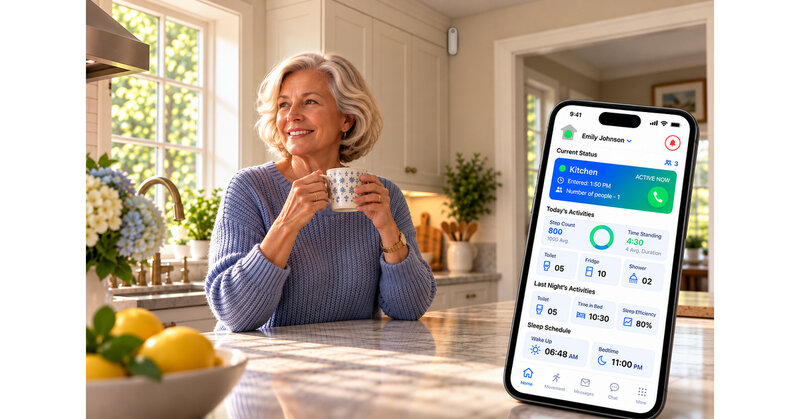
cortekAI is bringing at-home monitoring to older adults with 'havn,' a service that learns a resident's normal room-to-room routine and alerts family or professional caregivers when a fall or an unusual lull breaks the pattern. The setup relies on passive sensors instead of cameras or pendants, so people living alone do not need to wear or charge anything.
It also lets residents place voice calls or request help, and critical alerts can be escalated from caregivers to emergency responders when needed. U.S. availability starts November 30, with sales to families and through independent living communities and in-home care agencies.
U.S. sales through both families and care partners broaden this beyond a gadget purchase and position privacy-first monitoring as an add-on for home care and senior housing. Passive room sensors that avoid cameras and wearables shift the category toward lower-friction oversight, especially when an older adult resists visible surveillance.
Image Credit: cortekAI
What's Driving This Trend
- Camera-free Monitoring
- Passive sensors that interpret movement patterns without visual capture create space for privacy-centered safety systems in homes where traditional surveillance feels intrusive.
- Routine-aware Alerts
- Behavioral baselines that flag deviations can transform senior care from reactive emergency response into earlier detection of risk and wellbeing changes.
- Wearable-free Assistance
- Ambient help systems that do not require charging, wearing, or remembering a device reduce friction for older adults who resist or forget conventional safety tools.
Who This Affects Most
- Senior Care
- In-home care providers can expand service models through unobtrusive monitoring that supports caregivers between visits while preserving resident dignity.
- Independent Living
- Senior housing operators gain a privacy-forward layer of oversight that differentiates communities without introducing camera-based surveillance.
- Emergency Response
- Escalation pathways from household alerts to responders suggest new integrations between consumer monitoring platforms and urgent care infrastructure.