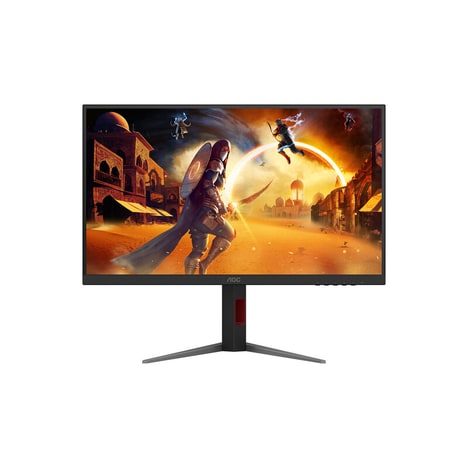
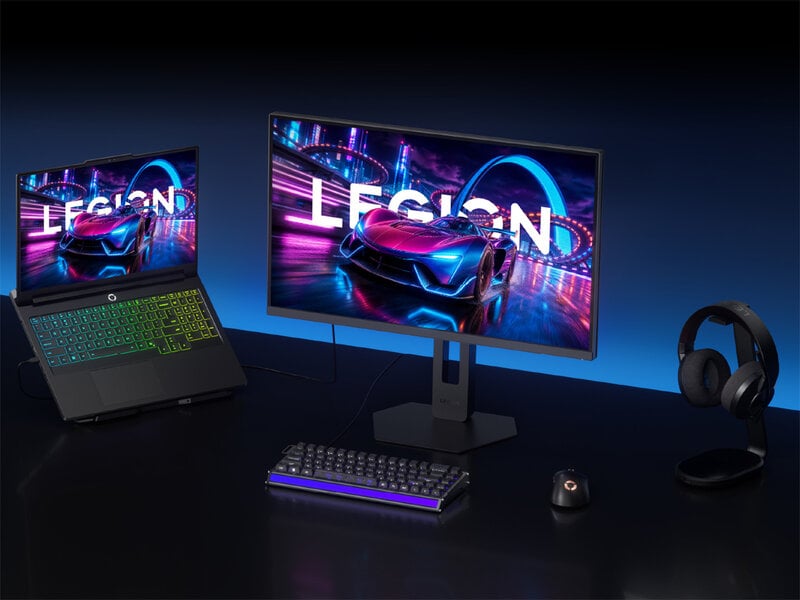
Lenovo's Legion 27Q-20 brings a 320Hz refresh rate to a lower-priced gaming monitor in China, giving competitive gamers a faster view of motion during quick matches. It uses a 27-inch IPS panel at 2560x1440. Unlike Lenovo's recently released 27U-20, this version leaves out dual-mode support.
Its slim stand leaves room for a close keyboard-and-mouse setup, and it still supports AMD FreeSync Premium and Nvidia G-Sync to reduce tearing. The stand also rotates and lifts up to 135 mm, and the monitor works with VESA mounts. In China, it starts at CNY 1,149, or about $172, while wider release plans remain unconfirmed.
At about $172 in China, Lenovo undercuts the idea that a 320Hz display must sit in a premium bracket. The Legion 27Q-20 widens access to speed-first gaming setups for players who care more about motion and desk fit than dual-mode extras.
Image Credit: Lenovo
What Makes This Trend Stand Out
- Affordable High-refresh Gaming
- Premium motion clarity moving into lower price tiers signals room for value-focused hardware brands to redefine competitive gaming standards.
- Speed-first Display Design
- Monitors prioritizing refresh rate, low tearing, and compact ergonomics reflect a shift toward performance essentials over feature-heavy premium configurations.
- Accessible Esports Setups
- Lower-cost 320Hz displays expand the addressable market for amateur competitors seeking tournament-style responsiveness without flagship spending.
Sectors Adopting This
- Gaming Hardware
- Budget high-performance monitors create pressure for component makers and peripheral brands to deliver esports-grade experiences at mass-market prices.
- Consumer Electronics
- Price disruption in advanced display specs highlights opportunities for mainstream electronics companies to reposition premium technologies as everyday purchases.
- Esports
- More affordable fast-refresh equipment can broaden participation and support new tiers of competitive play built around accessible performance gear.