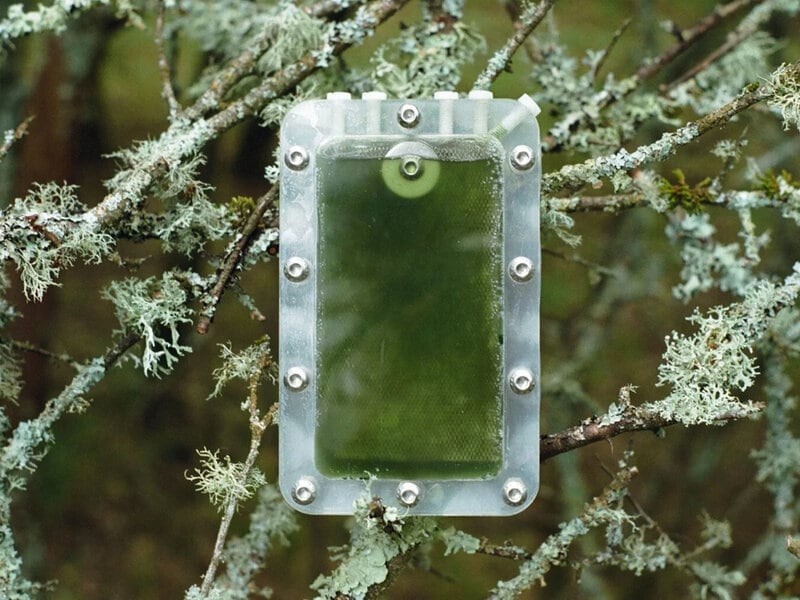
Biocell is a prototype energy system developed by bio-designer Lucia Giron in collaboration with the University of Cambridge's Department of Biochemistry and electrical engineer Lifu Tan. The technology uses cyanobacteria to generate electricity through biophotovoltaics, producing electrical current during photosynthesis while continuing to deliver power after dark. The research explores a biological alternative to disposable batteries for low-power electronic devices.
Prototype applications include a clock radio, a temperature sensor and a plant monitoring system capable of measuring light levels, air temperature and soil moisture while transmitting data to a mobile app. The research team has also created a transparent demonstration unit to showcase the living energy system and launched the startup e-Pho to explore commercial applications. Alongside product development, the project includes an educational toolkit that enables students to cultivate cyanobacteria, assemble biocells and evaluate the performance of different materials.
Image Credit: Lucia Giron, University of Cambridge’s Department of Biochemistry
Key Themes Behind This Trend
- Living Energy Cells
- Photosynthetic microorganisms embedded in power systems point to electronics that can generate low-current electricity from ambient light with fewer disposable battery inputs.
- Bio-powered Sensors
- Low-power monitoring devices can benefit from biophotovoltaic energy sources that support remote environmental data collection beyond conventional battery replacement cycles.
- Educational Bioelectronics Kits
- Hands-on cyanobacteria cultivation and circuit assembly kits create new pathways for schools and labs to teach biotechnology, renewable energy and materials testing through living prototypes.
Where This Applies
- Renewable Energy
- Biological photovoltaic systems expand the clean energy landscape by introducing living organisms as decentralized power sources for micro-scale applications.
- Consumer Electronics
- Small devices such as clocks, sensors and plant monitors reveal a market for bio-integrated power modules that reduce dependence on single-use batteries.
- Education Technology
- Curriculum-ready biocell kits connect biology and electronics instruction, supporting experiential learning tools around sustainable design and emerging energy science.