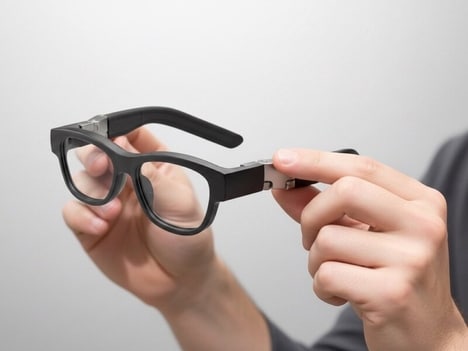
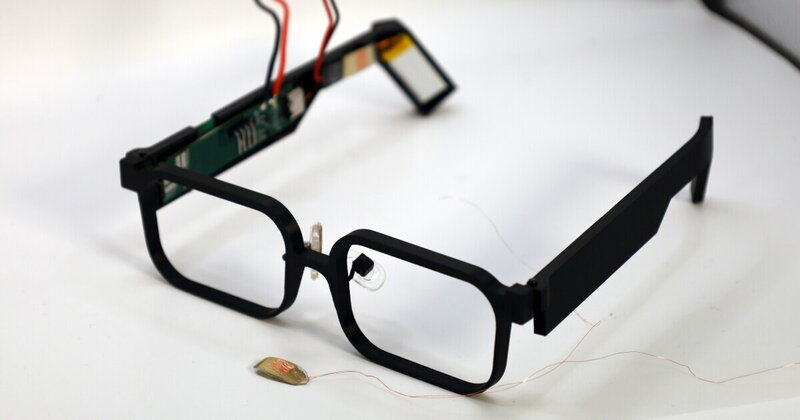
Northwestern University’s GlassTENG turns blink motion into power for battery-free health-sensing glasses, so the frame can track the wearer without a charging routine. It is a prototype built to read everyday facial movement and translate it into health data.
The glasses use triboelectric nanogenerators, thin sensors that harvest static electricity as materials touch and separate. Mounted on the frame, they watch pulse and jaw activity to help flag bruxism and fatigue while staying close to ordinary eyewear. In testing, the system identified actions with 93.8% accuracy and tracked pulse against a chest strap with a small average error.
Battery-free sensing changes wearables from something that needs regular power management into something that can stay on the face all day. The Bluetooth link to a phone or tablet keeps the data usable now, and on-device processing could make glasses a more practical health monitor later.
Image Credit: Northwestern University
Why This Trend Is Growing
- Battery-free Wearables
- Self-powered sensing embedded into daily accessories expands continuous health monitoring without charging friction or bulky power components.
- Facial Motion Biometrics
- Everyday micro-movements from blinking, jaw activity, and pulse create new data streams for passive wellness insights and behavioral diagnostics.
- Invisible Health Monitoring
- Clinical-grade sensing hidden inside familiar eyewear points to a future where health tracking blends into routine objects rather than dedicated devices.
Industries Being Reshaped
- Wearable Technology
- Energy-harvesting components give device makers pathways to lighter, lower-maintenance products that improve long-term user adherence.
- Digital Health
- Passive data collection from ordinary eyewear enables earlier detection of fatigue, bruxism, and cardiovascular signals outside traditional care settings.
- Smart Eyewear
- Health-sensing frames add functional value beyond vision correction and augmented displays, creating differentiation in a crowded eyewear market.