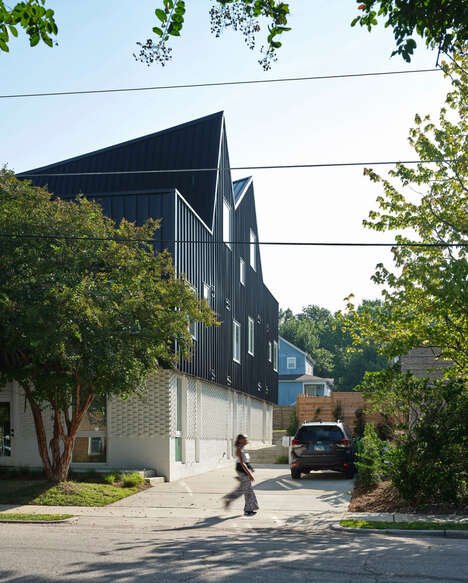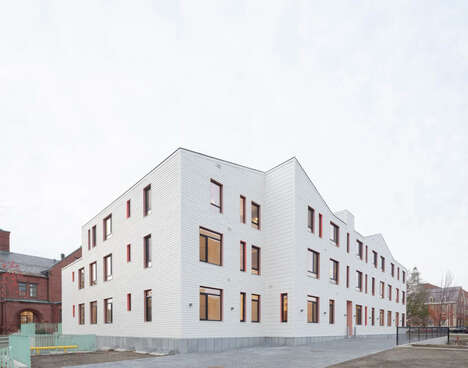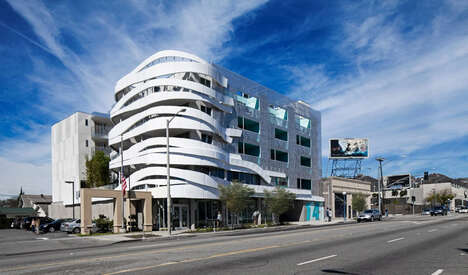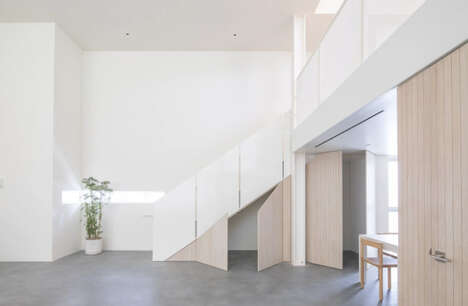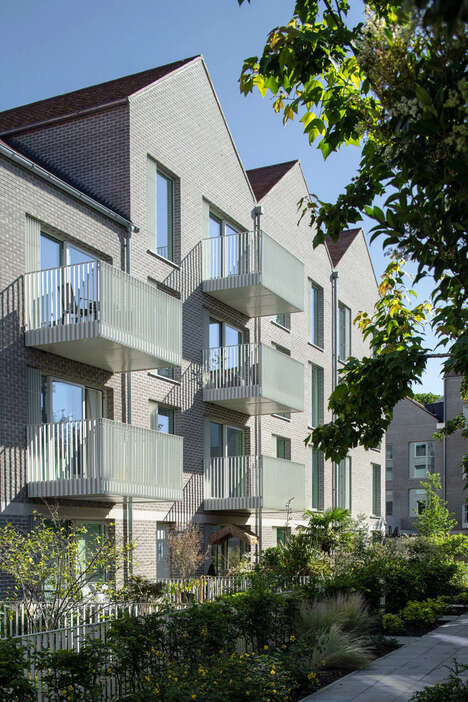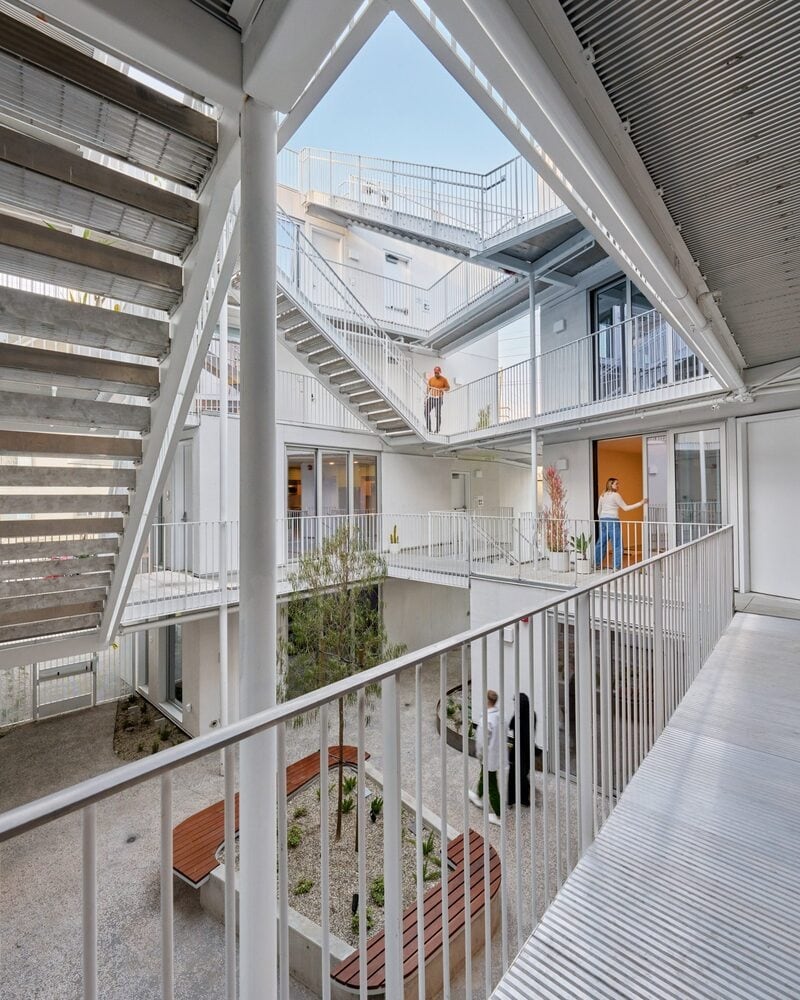
LOHA presents Barrington1503 as a co-living building that explores layered community and privacy within an urban context. Located on Barrington Avenue, the four-story, 24,200-square-foot project contains 18 fully furnished units, each offering four or five bedrooms organized around a central courtyard. Exterior corridors, wide balconies, and open stairs frame a ground-level tree, ensuring residents maintain both visual and social connections across the complex.
The architecture is divided into four distinct volumes with contrasting materials: black ribbed metal along the street and white stucco with deep grooves facing the courtyard. Shared amenities include a rooftop deck with barbecue, a communal kitchen and lounge, and limited underground parking. Corridors shift from green in common areas to white in private bedrooms, creating clear spatial transitions. Barrington1503 demonstrates how co-living can balance affordability with thoughtful design, offering privacy while fostering community.
Image Credit: Eric Staudenmaier
What Makes This Trend Stand Out
- Layered Community Architecture
- Architectural designs that incorporate layered community spaces are redefining urban living with a focus on balancing privacy and social interaction.
- Co-living Solutions
- Co-living arrangements that combine shared amenities with individual privacy are emerging as affordable housing solutions in urban environments.
- Material Contrast Design
- Using contrasted materials for distinct sections of a building presents opportunities for aesthetic innovation and environmental responsiveness in urban architecture.
Sectors Adopting This
- Urban Housing
- The urban housing industry is witnessing a transformation through projects that integrate community-focused and privacy-respecting architectural designs.
- Real Estate Development
- Real estate developers are exploring innovative co-living frameworks as a response to increasing demand for affordable and community-oriented urban housing.
- Architectural Design
- Architectural design is being revolutionized by projects like Barrington1503, which utilize contrasting materials and layered designs to create versatile living environments.