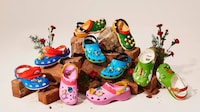
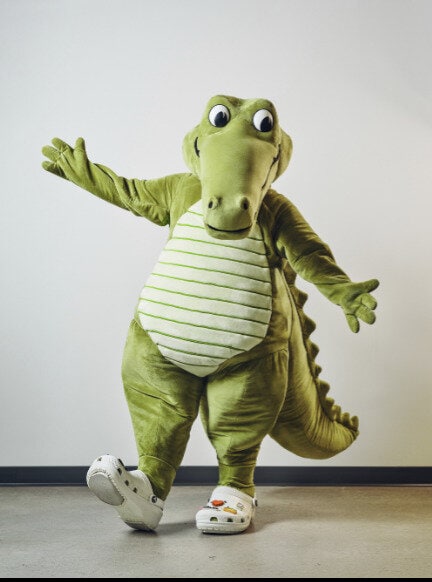
Crocs, the casual footwear company known for its signature clog design, has introduced Niles, a six-foot-tall anthropomorphic crocodile character that serves as the brand's official mascot. This marks a strategic shift toward character-driven storytelling that builds on the crocodile silhouette that has been a visual element of the footwear since the company's founding over two decades ago.
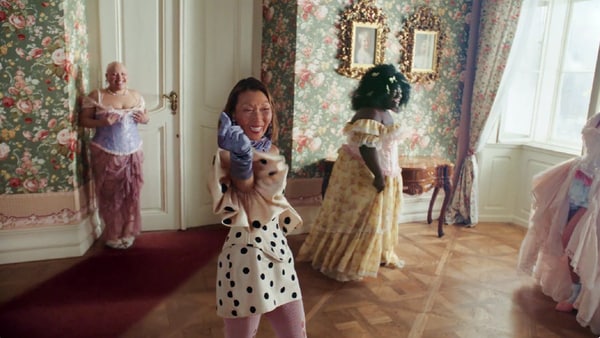
The launch of the anthropomorphic crocodile character was preceded by a series of playful teasers, including a mysterious egg appearing in various brand assets and social media streams. All of this culminated in a live hatching event on Crocs' channels, and Niles is now being rolled out through a weekly episodic micro-series filmed at the company's headquarters. There, the anthropomorphic crocodile character is seen interacting with real employees and navigating office life in a comedic, sitcom-like format.
Image Credit: Crocs
What Makes This Trend Stand Out
- Mascot-led Storytelling
- Brand-owned characters create expandable narrative worlds that deepen emotional connection beyond product features and seasonal campaigns.
- Episodic Social Content
- Short-form recurring series formats turn corporate channels into entertainment destinations with ongoing audience retention potential.
- Teaser-driven Launches
- Mystery-led reveals and staged digital events build anticipation by transforming product-adjacent announcements into participatory cultural moments.
Sectors Adopting This
- Footwear
- Character-based branding gives casual shoe companies new ways to differentiate commoditized silhouettes through personality, lore, and fandom.
- Social Media Marketing
- Mascot-centered micro-content expands the role of brand accounts from promotional feeds into serialized entertainment platforms.
- Entertainment Branding
- Corporate mascots with sitcom-style narratives blur the line between advertising and original content, creating new licensing and engagement pathways.