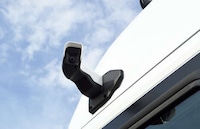

Having a good view of objects coming up behind a car is especially important when driving around corners at breakneck speeds, which is why the Audi AMOLED digital rearview display was developed to give drivers of the brand's R18 model crystal clear vision of the cars behind them.
While digital back-view mirrors are not a new notion, as many newer car models sport this technology as a standard feature, it is the first time that this technology has been implemented in a race car. Traditional mirrors work just fine when driving to the supermarket, but when one is ripping down the racetrack at 300 mph, the turbulence and weather elements can severely blur the image.
A digital display offers the ability to see cars coming up around the bend clearly, which is an essential safety feature that will allow drivers to keep their speed at a high while avoiding collisions.
What's Driving This Trend
- Digital Rearview Displays
- The implementation of digital rearview displays in race cars presents opportunities for improved safety and visibility at high speeds.
- Race Car Safety Technology
- The development of collision-preventing mirrors for race cars highlights advancements in safety technology within the racing industry.
- Enhanced Visibility in Extreme Conditions
- The use of AMOLED digital rearview displays in race cars allows for clearer vision in turbulent and weather-challenging environments.
Who This Affects Most
- Automotive
- The automotive industry can adopt digital rearview displays to enhance safety and visibility features in both race cars and everyday vehicles.
- Racing
- Incorporating collision-preventing mirrors in race cars presents a disruptive innovation opportunity in the racing industry to improve driver safety and performance.
- Display Technology
- The application of AMOLED digital displays in rearview mirrors opens up new possibilities for the display technology industry to expand into automotive safety solutions.