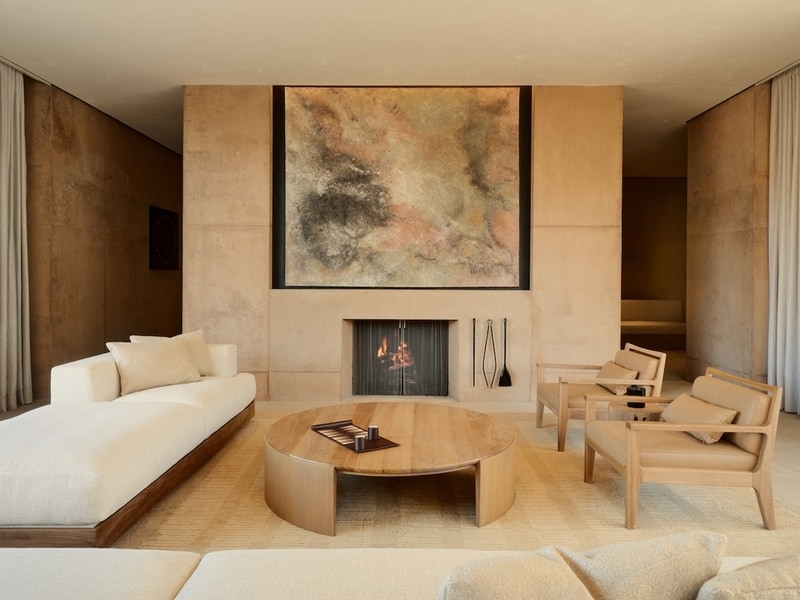
The Amangiri Six-Bedroom Villa is a private residence set within Utah’s Canyon Country, designed to operate as both a home and hospitality environment. The project was developed by Aman and designed by architect Marwan Al-Sayed of MASASTUDIO, one of the original architects behind the resort. The villa spans approximately 1,115 square metres across nine acres, with a low-slung structure that follows the contours of the desert terrain.
The layout is organized around open-plan living and dining areas that extend directly into outdoor terraces, loggias, and a 36-metre swimming pool aligned with the horizon. Six bedrooms each include ensuite bathrooms, while the primary suite adds a private courtyard and pool. Oculus skylights draw light into the interior, referencing canyon apertures, while large glass planes frame surrounding rock formations and shifting desert light. The villa includes a private spa, fitness room, and full-service kitchen supported by a dedicated chef and host.
Image Credit: Aman
Why This Trend Is Growing
- Desert-integrated Architecture
- Buildings that follow natural contours and foreground local rock formations suggest demand for adaptive design systems tailored to fragile landscapes.
- Luxury Private Hospitality Residences
- The hybrid model combining full-service hotel amenities with private residences points to new membership-based and on-demand ultra-luxury stay concepts.
- Biophilic Daylight Integration
- Oculus skylights and expansive glazing that frame shifting desert light imply opportunities for advanced daylighting and view-framing technologies that enhance occupant well-being.
Industries Being Reshaped
- Hospitality
- High-end hospitality operations may shift toward bespoke villa offerings with dedicated chef-and-host service models designed for privacy and long-stay experiences.
- Luxury Real Estate
- Remote, design-led estates create markets for fractional ownership, concierge management, and asset structures that blend investment and personal use.
- Construction Materials and Systems
- Low-slung, terrain-following structures increase interest in lightweight, low-impact building systems and thermally efficient materials engineered for extreme diurnal desert conditions.