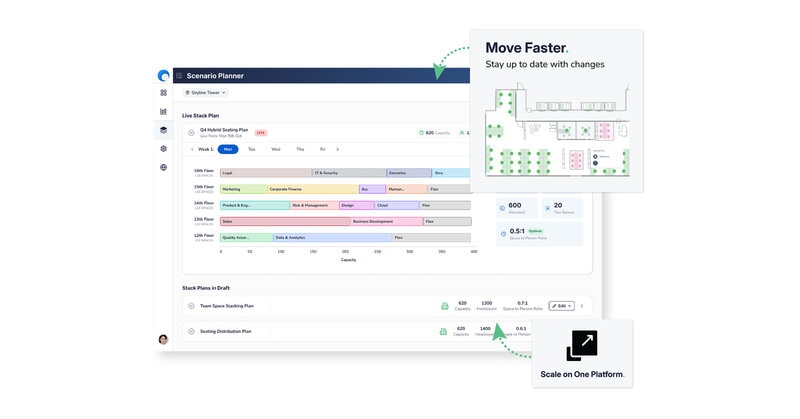
Freespace is advancing AI workplace planning with Space Manager, a platform that transforms office occupancy information into practical layouts and attendance schedules. Rather than simply tracking workspace usage, the software combines employee preferences with building data to help organizations coordinate hybrid teams and determine how available space should be allocated.
The platform gathers information from sensors, badge systems, and Wi-Fi networks before using an AI planning engine to evaluate seating arrangements and attendance patterns. It considers workplace objectives and physical floor plan restrictions, then communicates selected arrangements through employee applications and digital signage. This allows workers to identify where and when colleagues will be present.
For businesses, Space Manager could reduce inefficient office space allocation while improving coordination between employees. Its integration with Freespace's existing workplace tools also gives organizations a centralized approach to managing occupancy, supporting real estate decisions and employee experiences.
Image Credit: Freespace
Why This Trend Is Growing
- AI Space Orchestration
- Advanced planning engines are turning occupancy data into dynamic layouts that support hybrid teams while reducing wasted real estate capacity.
- Preference-based Scheduling
- Employee workstyle inputs combined with building intelligence create more personalized attendance patterns and better coordinated in-office collaboration.
- Sensor-driven Workplace Insights
- Integrated badge, Wi-Fi, and sensor data provides a richer operational layer for understanding how offices are used and where planning inefficiencies exist.
Industries Being Reshaped
- Workplace Technology
- Platforms that unify space planning, employee apps, and digital signage are reshaping how enterprises manage hybrid office experiences.
- Commercial Real Estate
- Real-time occupancy intelligence introduces new value for portfolio optimization, lease decisions, and underused space reduction.
- Human Resources
- Hybrid coordination tools give people teams deeper visibility into attendance patterns, collaboration habits, and employee workplace preferences.