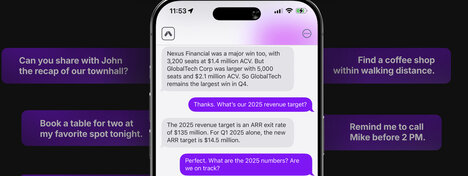
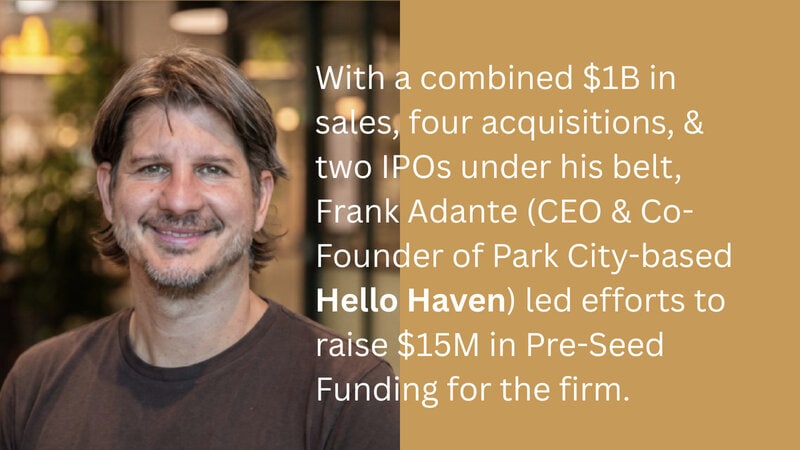
Hello Haven created Haven, an AI-powered software application that remembers a user’s preferences and decisions and acts on their behalf across email, phone, text and other applications. The launch coincides with a $15 million pre-seed financing round led by Mayfield.
Haven is designed to work as a personal digital twin, carrying a user’s memory, permissions and judgment between services. Hello Haven says the system draws on more than 500 AI models and 100 application integrations. The company also reports more than 2 million interactions since opening its private beta in August, although it has not disclosed its user count or revenue.
The combination of recall and action positions Haven as an assistant layer rather than a single-purpose tool. It reflects a broader shift toward agentic AI products that perform routine tasks across platforms while using individual preferences as context. For users, that model could reduce friction across frequent communications. For Hello Haven, the sizable pre-seed round provides capital to develop the product and test whether early interaction volume converts into sustained adoption.
Image Credit: Utah Money Watch
What's Driving This Trend
- Agentic Digital Twins
- AI assistants that carry personal memory and judgment across services create openings for platforms that manage delegated decisions, contextual preferences and ongoing user identity.
- Cross-app Automation
- Software that operates across email, phone, text and productivity tools points to new middleware models that reduce repetitive communication friction across fragmented digital ecosystems.
- Preference-based AI Memory
- Persistent recall of user choices and behaviors enables more adaptive personalization systems that can anticipate needs while redefining consent, trust and data portability.
Who This Affects Most
- Artificial Intelligence
- Agentic models and multi-model orchestration are expanding the market for AI systems that move beyond responses into autonomous, context-aware task execution.
- Productivity Software
- Personal assistant layers introduce competitive pressure on traditional workflow tools by centralizing routine scheduling, messaging and decision support across applications.
- Consumer Technology
- Digital twin assistants represent a shift in everyday device experiences as consumers increasingly expect software to understand preferences and act across connected services.