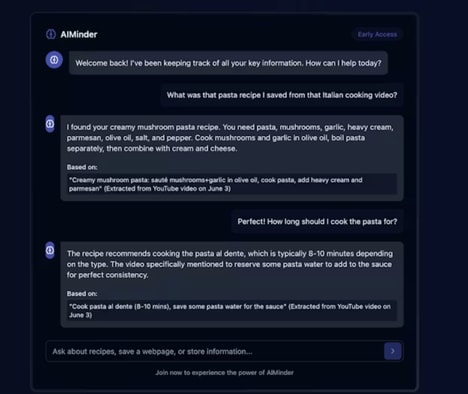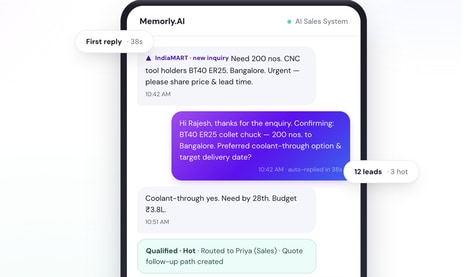
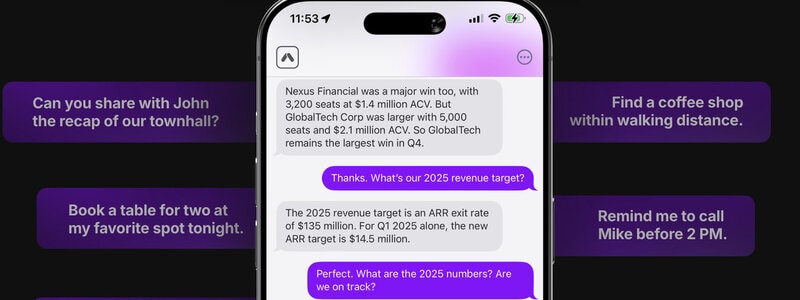
AI assistants are often limited by their inability to remember personal context, making conversations feel disconnected and requiring users to repeat information. Memno is an AI-powered personal assistant designed with long-term memory, helping users store, find, and interact with their important information more naturally.
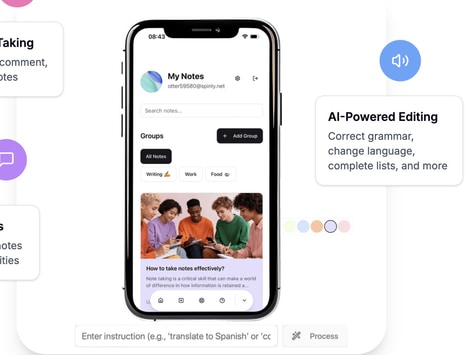
The platform remembers everything from whiteboards and voice notes to documents and everyday ideas, allowing users to quickly retrieve details whenever they need them. With features that help locate contract clauses, manage schedules, and handle everyday tasks, Memno acts as a more personalised AI companion that understands your routines and preferences. Designed for professionals, creators, and anyone managing large amounts of information, the platform makes knowledge easier to access and use. Memno helps users move beyond basic AI conversations toward a more connected, context-aware digital assistant.
Image Credit: Memno
What's Driving This Trend
- Persistent AI Memory
- Long-term context retention is reshaping assistant platforms by enabling more personalized, continuous interactions across documents, tasks, ideas, and professional workflows.
- Context-aware Productivity
- Smarter productivity tools are emerging around systems that understand user routines, preferences, and information patterns to reduce repetitive searching and manual organization.
- Personal Knowledge Retrieval
- AI-powered recall across voice notes, whiteboards, contracts, and files creates new value in transforming scattered personal information into instantly accessible knowledge.
Who This Affects Most
- Artificial Intelligence
- Memory-enabled assistants expand the AI market beyond conversational responses into adaptive platforms that retain user context and support ongoing decision-making.
- Productivity Software
- Professional software ecosystems are being disrupted by intelligent tools that combine scheduling, task handling, document search, and personalized knowledge management.
- Knowledge Management
- Enterprise and individual knowledge systems are shifting toward AI interfaces that make large volumes of unstructured information easier to locate, interpret, and reuse.