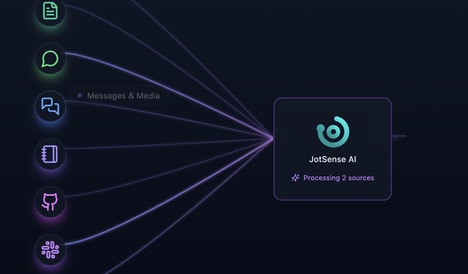
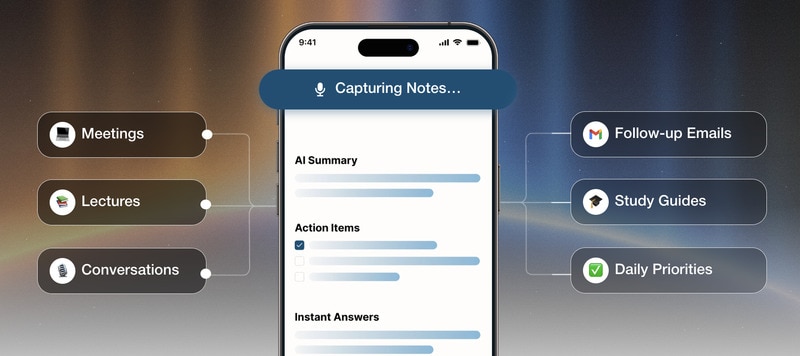
TwinMind is an AI system designed to continuously capture and interpret spoken information from meetings, lectures, and in-person conversations. It transcribes and summarizes discussions in real time, then layers this information into a growing contextual knowledge base.
Beyond documentation, the platform proactively surfaces suggestions, follow-ups, and tasks based on what it observes, aiming to reduce cognitive load and missed details. From a business perspective, TwinMind addresses common gaps in knowledge retention, alignment, and execution that arise from fragmented communication. By transforming everyday conversations into structured, searchable context, it supports better decision-making and continuity across teams and projects. The concept of an “AI Second Brain” positions TwinMind as an operational memory layer, helping professionals retain institutional knowledge, track commitments, and act on insights without relying solely on manual note-taking or post-meeting recall.
Image Credit: TwinMind
Key Themes Behind This Trend
- Conversational Knowledge Capture
- Continuous transcription and semantic tagging of spoken interactions creates a searchable institutional record that reduces information loss from meetings and hallway conversations.
- Proactive Contextual Assistants
- AI that anticipates follow-ups and surfaces contextually relevant tasks during or after interactions enables systems to act as an always-on collaborator rather than a passive archive.
- Persistent Contextual Memory
- Layering incremental conversational insights into a unified, evolving knowledge graph produces durable organizational memory that improves continuity across teams and projects.
Where This Applies
- Enterprise Software
- Integrating conversational memory into collaboration suites could shift value toward platforms that automate alignment, task generation, and knowledge retrieval for distributed workforces.
- Legal Services
- Automatic capture and contextualization of client conversations and depositions offers opportunities to recreate evidentiary timelines and reduce reliance on manual note-taking.
- Healthcare Providers
- Embedding persistent, searchable interaction records into clinical workflows can enhance care continuity by surfacing prior observations, treatment rationales, and follow-up needs across care teams.