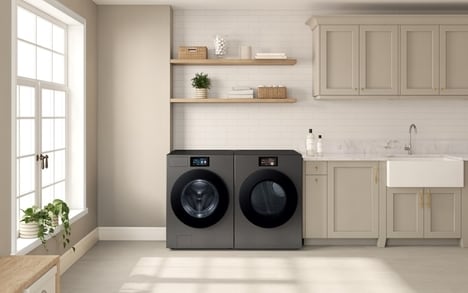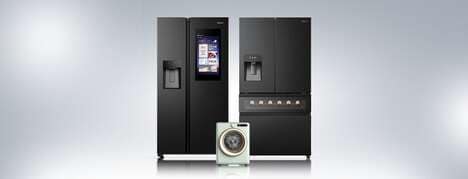
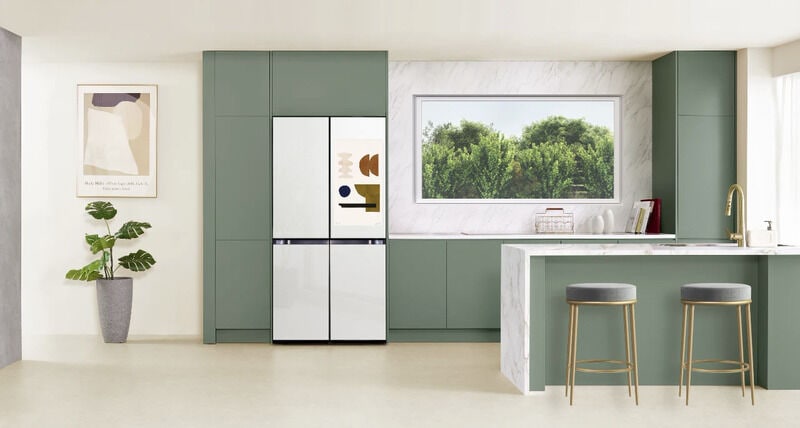
The Samsung AI Hybrid Cooling Technology is headed to CES 2025 to help transform the home refrigeration industry by integrating artificial intelligence (AI) into the mix. The technology is meant to optimize efficiency, while also enhancing overall food preservation to enable modern households to maximize sustainability within the home. The technology works by utilizing a high-efficiency compressor with a Peltier module and will kick into high gear to optimize cooling according to peak usage times and beyond.
The Samsung AI Hybrid Cooling Technology comes as one of the many solutions for the home appliance market that's being elevated using AI as brands seek to leverage its power. The technology could also contribute towards less food waste with the ability to keep pork and salmon fresher up to 1.4-times and 1.2-times longer, respectively.
What's Driving This Trend
- AI-driven Home Appliances
- AI-driven home appliances represent a technological leap, enhancing efficiency and sustainability in household operations.
- Sustainable Food Preservation
- Sustainable food preservation techniques are being revolutionized by AI, significantly extending the shelf life of perishable goods and reducing waste.
- Adaptive Cooling Systems
- Adaptive cooling systems leverage AI to dynamically adjust performance, optimizing energy usage in response to real-time conditions.
Who This Affects Most
- Home Appliance Manufacturing
- The home appliance manufacturing industry is being transformed by AI, introducing smart technologies that redefine product functionality and consumer expectations.
- Food Storage Solutions
- Food storage solutions are evolving with AI-enhanced technologies, offering improved preservation capabilities that decrease spoilage rates.
- Sustainable Technology Development
- Advancements in sustainable technology development are driving the integration of AI in products focused on energy efficiency and environmental impact reduction.