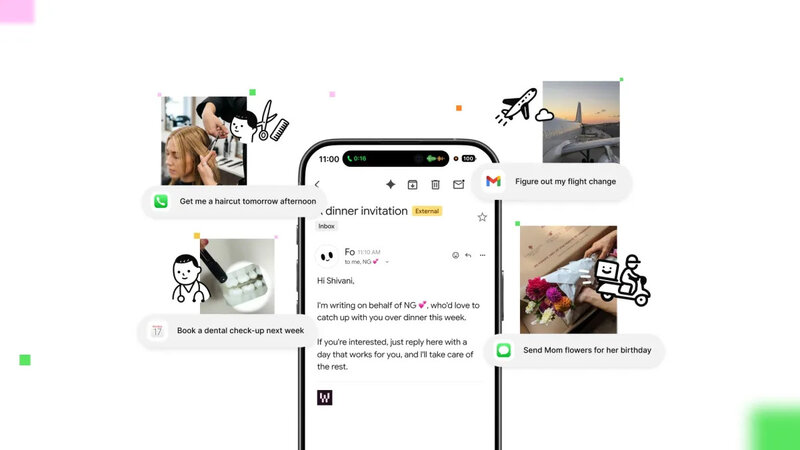
Wajo is bringing a trust-first personal AI assistant to everyday errands with Fo, a service that lets people hand off bookings, follow-ups, and other chores without exposing as much personal information. Created by former Google and DeepMind engineer Shivani Poddar, Fo is built around safety from the start.
A virtual credit card lets Fo pay without sharing the user's own details, while a human handoff keeps a task moving when the software hits a wall. Together, they push the assistant beyond planning and into real delegation, with fewer moments where the user has to step back in and finish the job.
This means personal AI gets judged less like a clever chatbot and more like a service they can trust with real-world chores. Assistants that feel invasive or brittle will look harder to justify once privacy and follow-through become part of the baseline.
Image Credit: Wajo
What's Driving This Trend
- Trust-first Delegation
- Privacy-preserving AI assistants create room for services that complete real-world errands while minimizing exposure of sensitive user data.
- Human-backed Automation
- Hybrid systems that combine AI workflows with human intervention can make personal assistants more reliable for complex or unpredictable tasks.
- Private Payment Agents
- Virtual payment tools embedded in AI services signal new models for secure transactions where assistants act on behalf of users without revealing core financial details.
Who This Affects Most
- Personal AI
- Trust and task completion are becoming key differentiators as assistant platforms shift from conversational support to delegated service execution.
- Fintech
- Tokenized and virtual card infrastructure can enable AI-mediated purchasing experiences that reduce fraud risk and protect consumer payment identities.
- Consumer Services
- Errand, booking, and follow-up platforms may be reshaped by AI agents that manage routine coordination with stronger privacy safeguards and continuity.