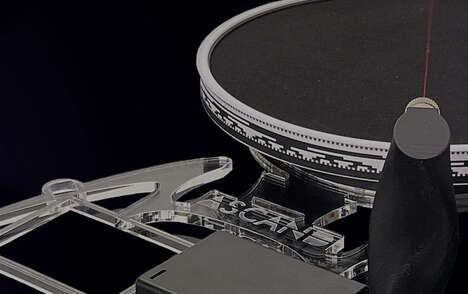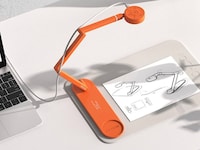
It's genuinely surprising that the Advanced Vertical Scanner is the only one of its type that I've come across. Its sort solves the problem of splayed pages that don't copy properly so that more printed media can be effectively rendered digitally.
Where the conventional scanner is composed of a single flat reading bed, Sang Hyun Jeong and Allan Hyunwoo Kim conceived their slim invention with in an upright position with a pair of windows on opposite faces. The rigidity of the device allows you to spread heavy hardcover books over top.
This setup leaves the pages flatter so that the words and photos near the novel's binding aren't fuzzy and discolored. The Advanced Vertical Scanner copies right up to its slender upper edge and can easily read single-sheet documents on either side.
Key Themes Behind This Trend
- Vertical Scanning
- Vertical scanning technology presents disruptive innovation opportunities for document scanning and digitization services.
- Book-optimized Design
- The book-optimized design trend opens up disruptive innovation opportunities in the printing and publishing industries.
- Improved Image Quality
- The focus on improved image quality in scanning devices offers disruptive innovation opportunities in the image recognition and OCR industries.
Where This Applies
- Document Scanning and Digitization Services
- The trend of vertical scanning can be applied in the document scanning and digitization services industry to streamline processes and enhance efficiency.
- Printing and Publishing
- The book-optimized design trend presents opportunities for disruptive innovation in the printing and publishing industries, enabling better reproduction of printed media.
- Image Recognition and OCR
- The focus on improved image quality in scanning devices offers disruptive innovation opportunities in the image recognition and OCR industries, enabling more accurate text extraction and analysis.