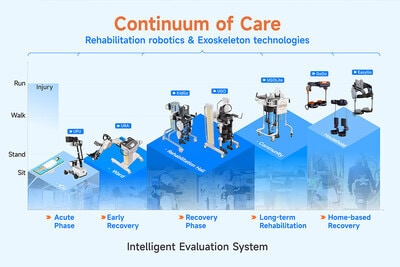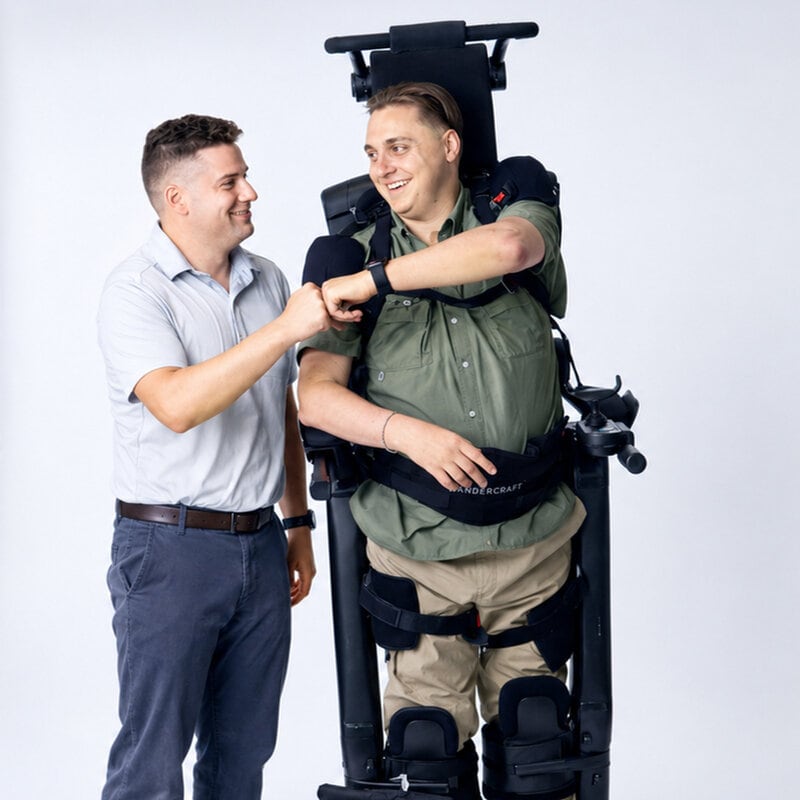
Self-balancing personal exoskeletons are moving beyond rehabilitation centers as Wandercraft prepares to commercially launch its FDA-cleared Eve device in the United States. Designed for eligible wheelchair users with spinal cord injuries, Eve uses self-balancing robotics to support hands-free walking, standing, bending, turning, and everyday activities. The device complements wheelchair use and can operate on level indoor surfaces and adjacent outdoor areas under the supervision of a trained companion. Users also receive individualized fitting and structured training before taking Eve home.
From a business perspective, FDA clearance opens a pathway for Wandercraft to bring advanced mobility robotics into the personal medical equipment market. Potential Medicare reimbursement, private insurance coverage, and partnerships with rehabilitation and distribution providers could make the technology accessible to more users. The model demonstrates how robotics companies can combine sophisticated hardware with training, reimbursement support, and service networks to commercialize assistive technologies beyond clinical environments.
Image Credit: Wandercraft
What's Driving This Trend
- Home-based Mobility Robotics
- Advanced assistive robots are shifting from clinical settings into daily living environments, creating space for integrated hardware, training, and service models that support independent movement at home.
- Reimbursable Assistive Technology
- Insurance-aligned mobility devices are redefining commercialization pathways for robotics companies by linking FDA clearance, coverage support, and patient access into scalable medical equipment strategies.
- Hands-free Accessibility
- Self-balancing exoskeletons signal a broader move toward mobility solutions that restore upper-body freedom, enabling new product categories around standing, reaching, and everyday task participation.
Who This Affects Most
- Medical Robotics
- Personal exoskeleton adoption expands the role of robotics beyond surgery and rehabilitation, opening opportunities for consumer-facing therapeutic devices with ongoing support ecosystems.
- Durable Medical Equipment
- Connected mobility systems could reshape traditional equipment markets as wheelchairs, exoskeletons, and service bundles converge into more personalized accessibility portfolios.
- Rehabilitation Services
- Provider networks gain relevance as training, fitting, and supervised adoption become central to bringing sophisticated mobility technologies safely into users’ homes.