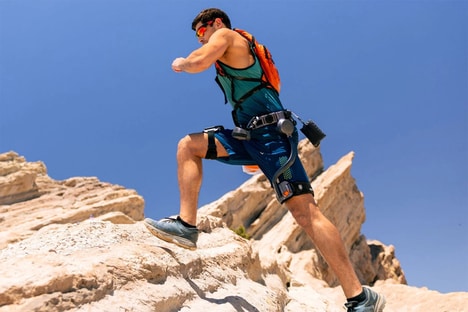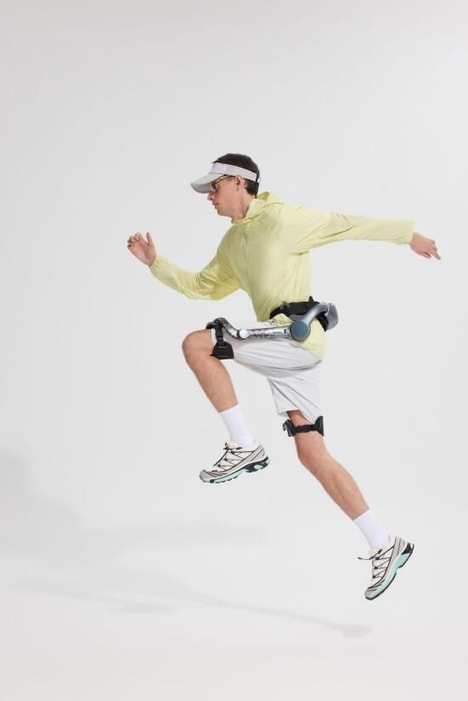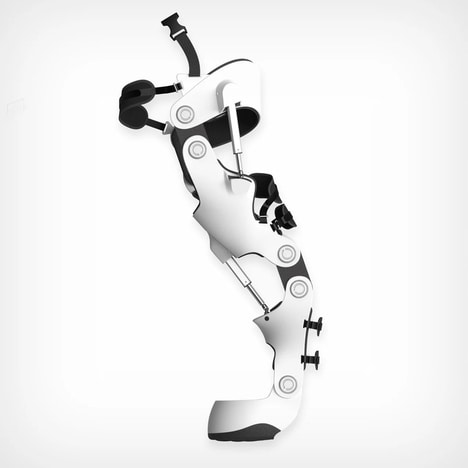
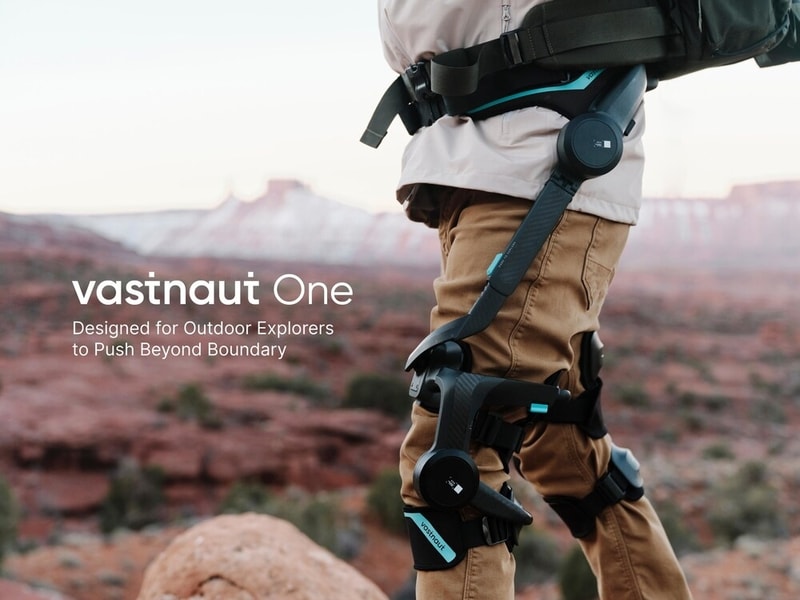
The Vastnaut One is an AI-powered exoskeleton with four joints and four motors. The device attaches to the wearer's lower body to assist with movement across rugged terrain.
Vastnaut's AI-powered exoskeleton uses Adaptive Torque Distribution technology to detect when the foot lands and deliver precisely timed support to the knees, while coordinating power between the hips and legs to make uphill walking easier and downhill impacts less jarring. Constructed largely from carbon fibre, the entire mechanical structure weighs only 2.7 kilograms, and the unit carries an IP54 rating for resistance against dust and water.
Vastnaut One can serve various outdoor expeditions — from photographers who carry extensive camera gear into remote locations to field researchers who trek for hours with equipment and serious hikers who push their limits.
Image Credit: Vastnaut
Key Themes Behind This Trend
- Lightweight AI-assisted Mobility
- Emerging ultralight exoskeletons combine onboard AI with minimal mass to enable prolonged assisted locomotion in remote environments, creating potential for portable endurance augmentation.
- Terrain-adaptive Torque Control
- Adaptive Torque Distribution that senses footstrike and reallocates power between joints introduces opportunities for context-aware gait optimization across variable slopes and surfaces.
- Carbon-fiber Wearable Systems
- Integration of high-strength, low-weight composites in wearable robotics supports highly durable yet lightweight platforms that can extend human capability without imposing substantial load penalties.
Where This Applies
- Outdoor Recreation & Adventure
- Enthusiast and commercial guiding markets could see a shift as assisted exoskeletons make longer, more technical routes accessible to a broader customer base while redefining equipment rental and guiding services.
- Field Research & Environmental Surveying
- Researchers operating in remote or rugged terrains may benefit from sustained mobility and reduced fatigue during long treks, enabling longer sampling campaigns and expanded survey coverage.
- Professional Photography & Remote Content Creation
- Photographers and content creators who carry heavy camera rigs into difficult locations can realize increased range and stability, potentially changing logistics and creative possibilities for on-location shoots.