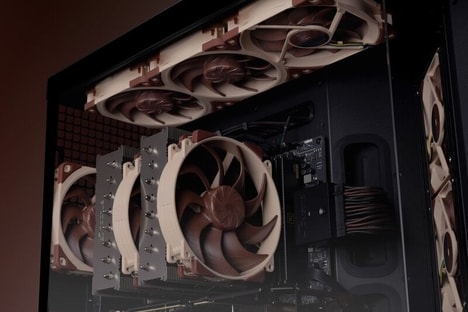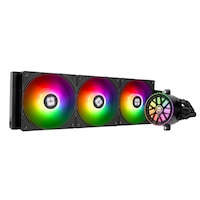
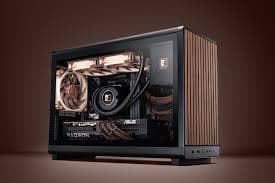
Noctua introduced the NL-LC1 series, its first All-In-One (AIO) liquid coolers, marking the brand’s shift from air to liquid cooling. Built on Asetek’s Emma V2 platform and featuring Noctua’s acoustic tuning, the lineup targets users seeking strong thermal performance with low noise. Models launched in 240mm, 360mm and 420mm sizes.
The NL-LC1 line includes a three-layer NL-PNA1 pump noise absorber, selectable pump speed profiles (Quiet, Balanced, Manual) and Noctua’s NF-A12x25 G2 or NF-A14x25 G2 fans, depending on radiator size. Radiators are a slightly thicker 30mm for improved dissipation, and the package uses SecuFirm2+ mounting with NT-H2 thermal paste included. An optional NL-ACF1 magnetic accessory fan adds localized VRM and M.2 airflow.
For consumers, the series delivers quieter high-end cooling without sacrificing compatibility or build quality, appealing to enthusiasts who value acoustics and reliability. Its premium pricing reflects Noctua’s engineering and a six-year warranty, underlining a trend toward acoustically optimized AIO solutions.
Image Credit: Noctua
Why This Trend Is Growing
- Acoustic Liquid Cooling
- Premium PC cooling is shifting toward liquid systems that combine high thermal output with engineered noise suppression for performance-focused users.
- Modular Thermal Accessories
- Localized add-ons such as magnetic airflow fans create new value around targeted cooling for motherboard components, memory, and storage.
- Platform-based Cooler Design
- Established pump platforms paired with brand-specific fan tuning reflect a faster path to differentiated premium hardware experiences.
Industries Being Reshaped
- Computer Hardware
- High-end component brands are expanding into hybrid cooling categories where acoustics, reliability, and warranty coverage influence enthusiast purchasing decisions.
- Gaming Pcs
- Quiet thermal performance supports more powerful desktop builds as gamers seek systems that sustain speed without excessive acoustic disruption.
- Semiconductor Cooling
- Rising processor and storage heat density is increasing demand for compact cooling architectures that manage multiple thermal zones inside consumer PCs.