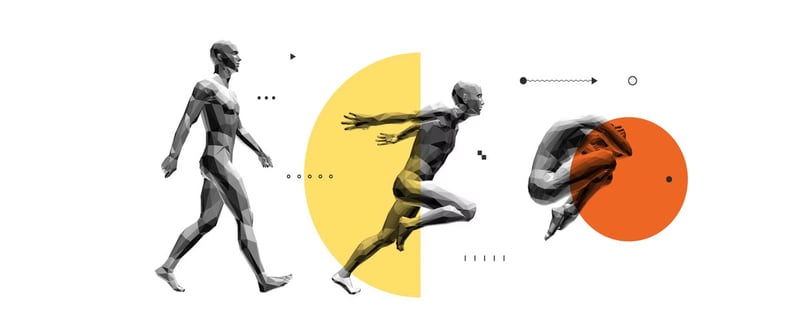
MotionAnalytics launched MotionID, a biomechanical AI identification platform that recognizes individuals based on how they move rather than relying on facial features, clothing or devices. Developed from more than 20 years of biomechanics research at Ben-Gurion University, the technology converts human movement captured in standard video into unique biomechanical signatures for identification and re-identification.
The platform works across standard, thermal, aerial and long-range video sources and is available as an SDK and API for cloud or on-premises deployment. MotionAnalytics said MotionID achieved more than 90% identification accuracy in pilots with a major homeland security organization and is designed to integrate with existing video analytics, surveillance and command-and-control systems.
For defense, homeland security and critical-infrastructure operators, MotionID provides a new identification method that remains effective when faces are obscured, appearances change or image quality is degraded. By using motion as a biometric identifier, the platform expands identification capabilities in environments where traditional appearance-based systems often struggle to perform reliably.
Image Credit: MotionAnalytics
Why This Trend Is Growing
- Gait-based Biometrics
- Movement signatures are emerging as a privacy-adjacent identification layer for environments where faces, clothing and device-based credentials are unreliable.
- Multimodal Surveillance AI
- Video intelligence systems gain broader operational value when standard, thermal, aerial and long-range feeds can support identity recognition through nonvisual appearance cues.
- Degraded-image Identification
- Security analytics are shifting toward resilient biometric models that maintain recognition accuracy despite occlusion, distance, low resolution or changing physical presentation.
Industries Being Reshaped
- Homeland Security
- Border, airport and public-safety operations benefit from identity systems that can re-identify individuals without dependence on clear facial imagery or cooperative screening.
- Critical Infrastructure
- Energy, transportation and utility sites represent high-value settings for continuous perimeter intelligence that distinguishes people by movement across difficult camera conditions.
- Defense Technology
- Military surveillance platforms are increasingly defined by AI capabilities that extract identity signals from remote, aerial or obscured video in contested environments.