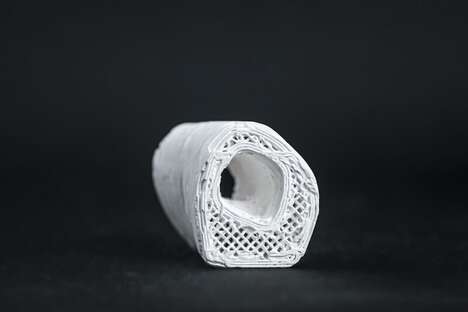
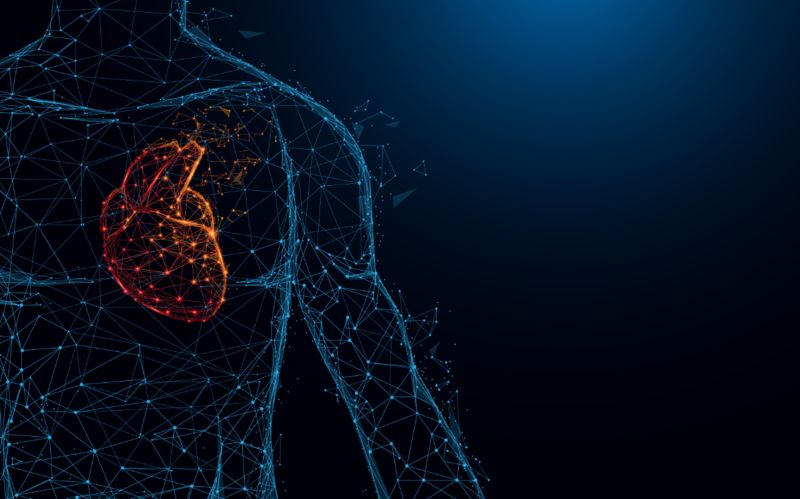
BIOLIFE4D, a Chicago-based company, has created a small 3D-printed human heart. The heart has the same inner-workings as a full-sized heart and was entirely 3D-printed. BIOLIFE4D's 3D-printed human heart was created using cells from cardiac muscle, which are also called cardiomyocytes. The heart was then comprised of bioink, which was created using extracellular matrix compounds which mimic the tissue of a human heart.
BIOLIFE4D has goals to eventually be able to bioprint a fully functioning human heart. 3D printed organs would be able to replace the need for organ donations and provide much faster organ replacements to patients in need. The company was first able to bioprint cardiac tissue in June of 2018, and this most recent achievement builds toward the company's goals.
Image Credit: BIOLIFE4D
Key Themes Behind This Trend
- Bioprinting Human Organs
- The development of 3D printing technology in bioprinting human organs has the potential to revolutionize the field of medicine.
- Organ Shortage Solutions
- The use of 3D-printed human organs can address the global shortage of organs for transplants, providing a viable solution for patients in need.
- Advancements in Tissue Engineering
- The ability to 3D print functioning human organs is driving advancements in tissue engineering, leading to new opportunities in regenerative medicine.
Where This Applies
- Medical Technology
- The medical technology industry can leverage 3D printing human organs to improve patient outcomes and revolutionize the field of organ transplantation.
- Biotechnology
- The biotechnology industry can explore the use of 3D-printed human organs to develop new therapies and personalized medicine.
- Pharmaceuticals
- The pharmaceutical industry can collaborate with 3D printing companies to enhance drug testing and develop more effective treatments by using 3D-printed human organ models.