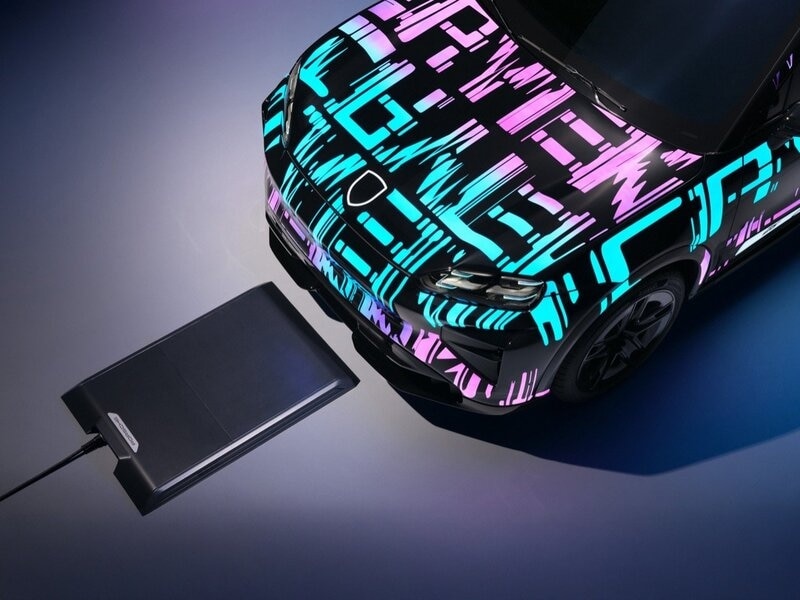
Porsche introduces wireless charging for the Cayenne Electric SUV in 2026, allowing owners to power their cars without plugging in. The system uses an inductive floor plate delivering up to 11 kW and a receiver mounted under the vehicle. As the SUV parks above the plate, it lowers to align automatically and begins charging with up to 90 percent efficiency, providing performance comparable to a standard Level 2 home charger. The technology aims to make daily charging seamless while reducing wear on connectors and cables.
The charging plate is designed for garages or driveways and connects with the My Porsche app to monitor status remotely. Built-in safety features ensure the system pauses if an object or living being is detected under the car. Launching first in Europe in 2026 with the debut of the Cayenne Electric, the system is expected to expand across other Porsche models, offering drivers a new level of convenience in electric vehicle ownership.
Image Credit: Porsche
Key Themes Behind This Trend
- Seamless Home Charging
- Wireless charging systems enable effortless EV powering without manual plug-in, enhancing user convenience through inductive technology.
- Smart Vehicle Integration
- Integration with applications like My Porsche app offers real-time monitoring and control of charging systems, paving the way for more connected, intelligent vehicle management.
- Enhanced EV Safety Measures
- Built-in object detection in charging systems improves safety standards, reducing risks and increasing consumer trust in wireless EV solutions.
Where This Applies
- Electric Vehicles
- The electric vehicle industry benefits from innovative charging solutions, which address consumer needs for convenience and efficiency in daily vehicle use.
- Smart Home Technology
- Seamless integration of charging systems with home tech platforms opens up opportunities for interconnected smart environments that enhance lifestyle.
- Renewable Energy Solutions
- Advancements in wireless charging reflect a shift towards more sustainable energy practices that align with the growing emphasis on renewable energy sources.